MONEY
Money & credit
Statements, the balance sheet, borrowing, fuel hedges, credit and running short.
Where money goes
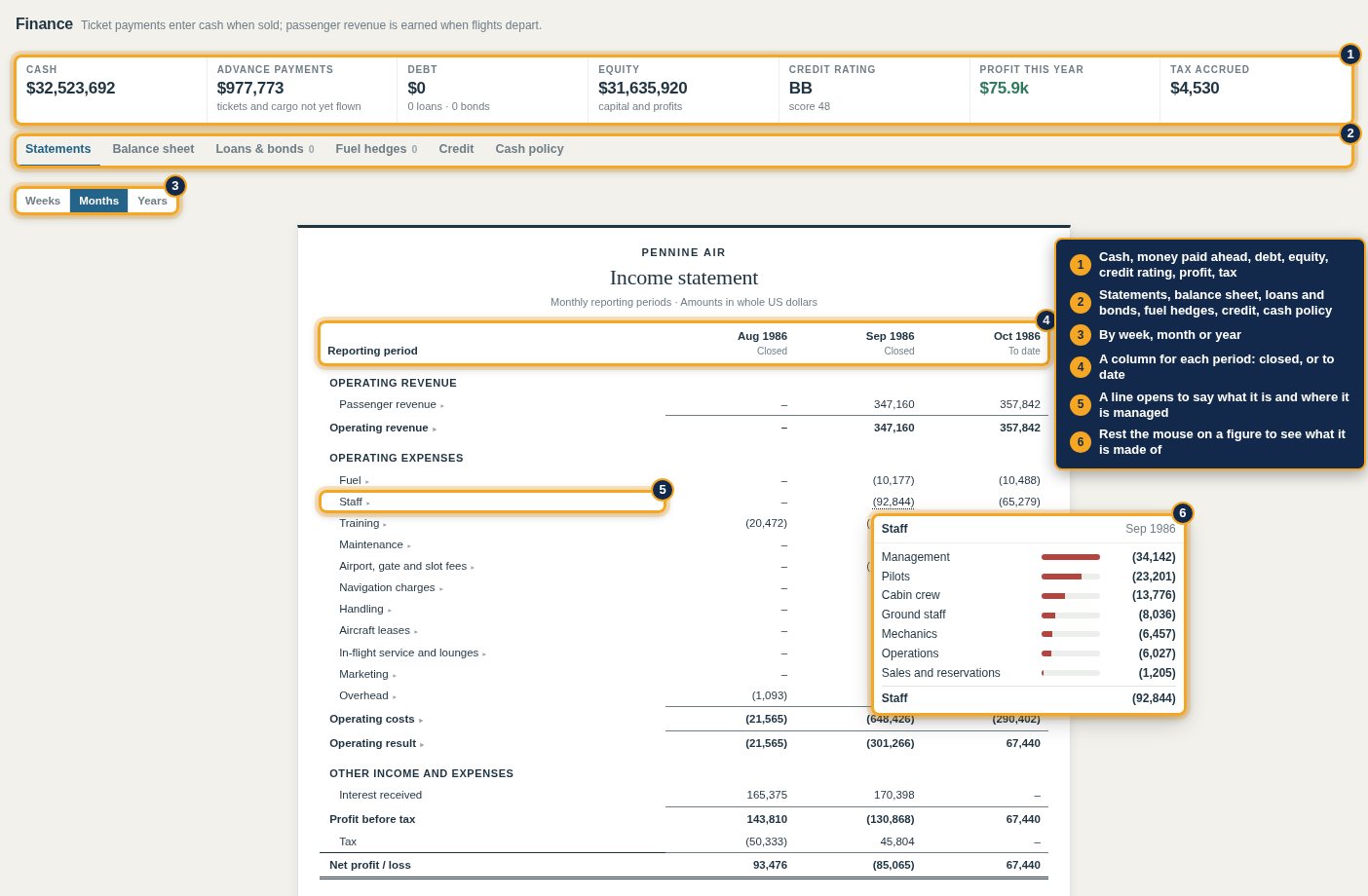
Fuel, aircraft rent and loan payments, staff, maintenance, airport fees and gate rent, handling, service and marketing. Costs rise with size and complexity, and a mixed fleet costs more than a uniform one. Profits are taxed at your home country's rate. All money is US dollars; prices inflate over time and there are no exchange rates.
Finance → Statements shows each week, month or year. A line opens to say what it is and where it is managed; resting the mouse on a figure shows what it is made of. Ticket payments enter cash when sold; revenue is earned when flights depart.
The balance sheet
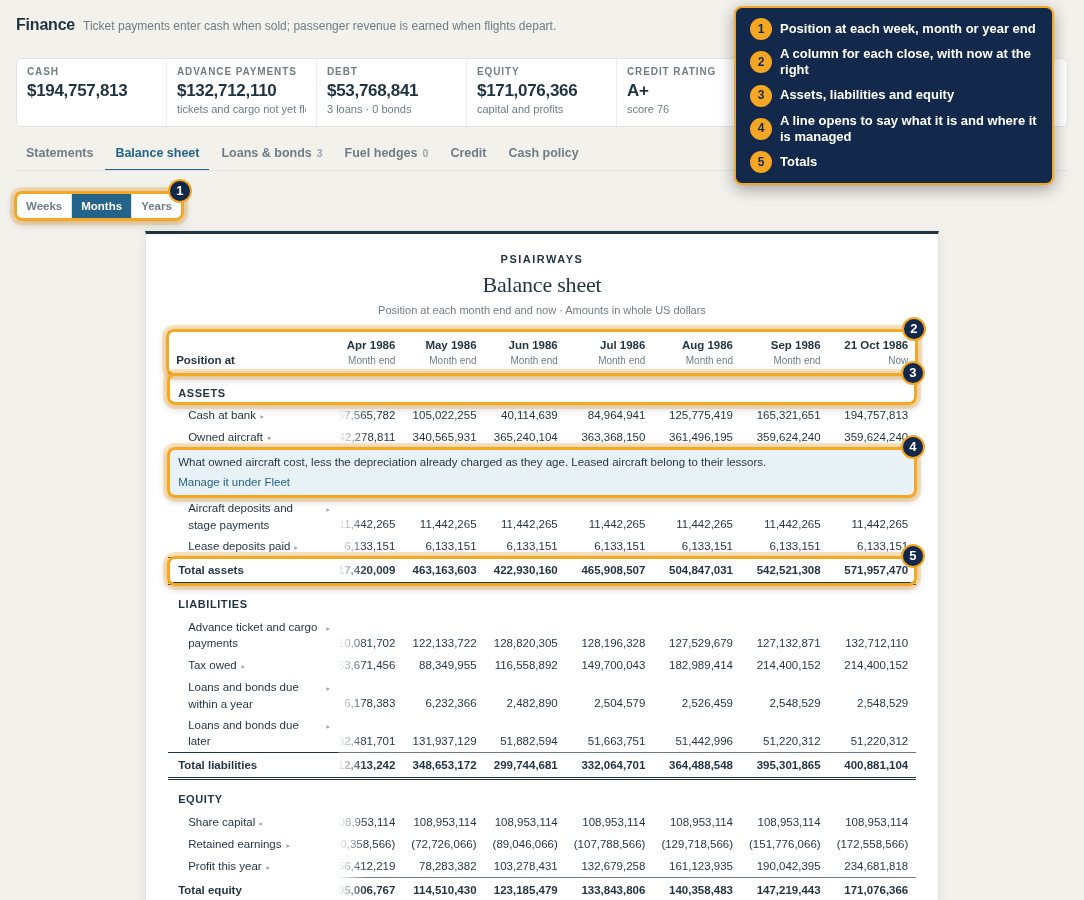
The balance sheet gives the position at each week, month or year end and now: cash, owned aircraft at book value, deposits paid, money paid ahead for tickets and freight, tax owed, loans and bonds, share capital and retained earnings. Below it are your aircraft at book and market value, repayments and rent to come, and aircraft on order.
Raising money
- Revenue from tickets, fees and freight, and money paid ahead by passengers.
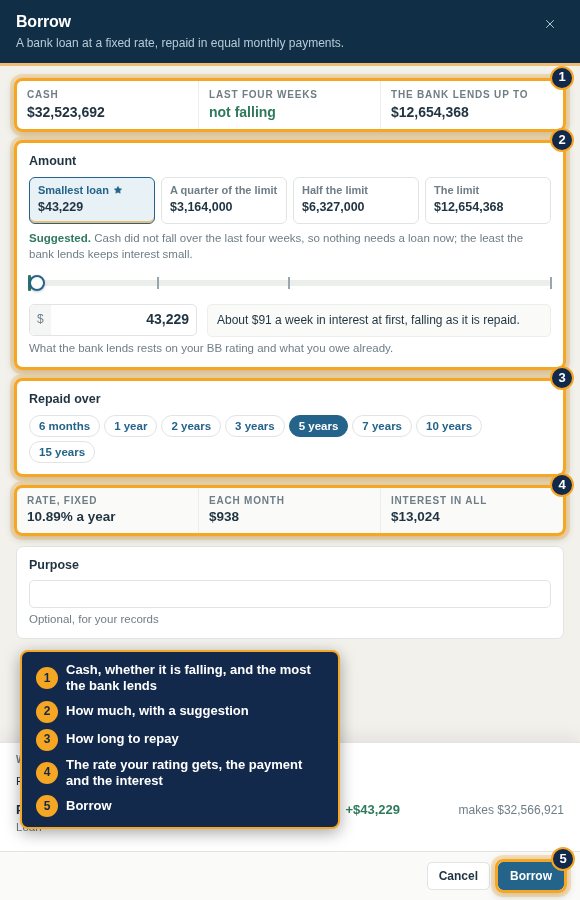
- Loans from banks at a rate set by your credit rating, under Loans & bonds; repaying early says what it saves.
- Bonds, borrowing from the market once the company is a year old.
- Leases, so aircraft need not be bought.
- Shares: capital without debt; see Capital, shares & takeovers.
- Bonds: once issued they trade in the bond market, where your airline can buy them back; see Margin, shorts, options & bonds.
Fuel
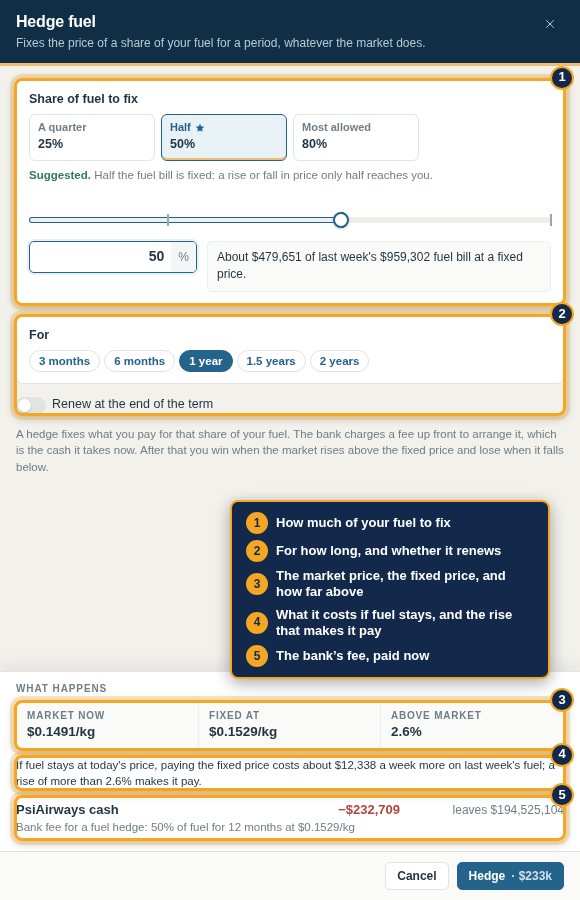
Fuel follows history, shocks included. A hedge fixes the price of a share of your fuel for a period: the bank charges a fee up front, then you win when the market rises above the fixed price and lose when it falls below. The sheet says what it costs if fuel stays where it is, and the rise that makes it pay.
Credit rating
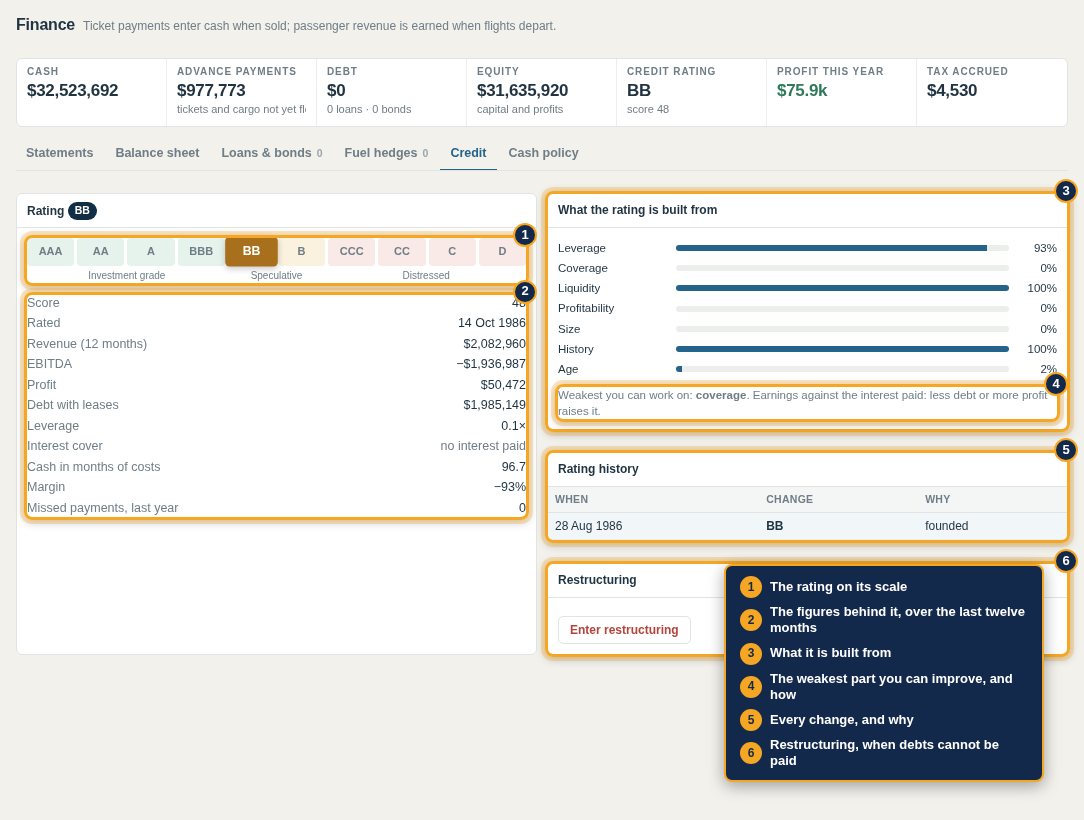
Your rating sets how much you can borrow and at what rate, and which lessors lease to you. It is built from leverage, interest cover, liquidity, profitability, size, age and payment history; each part says what it measures and what raises it.
When money runs short
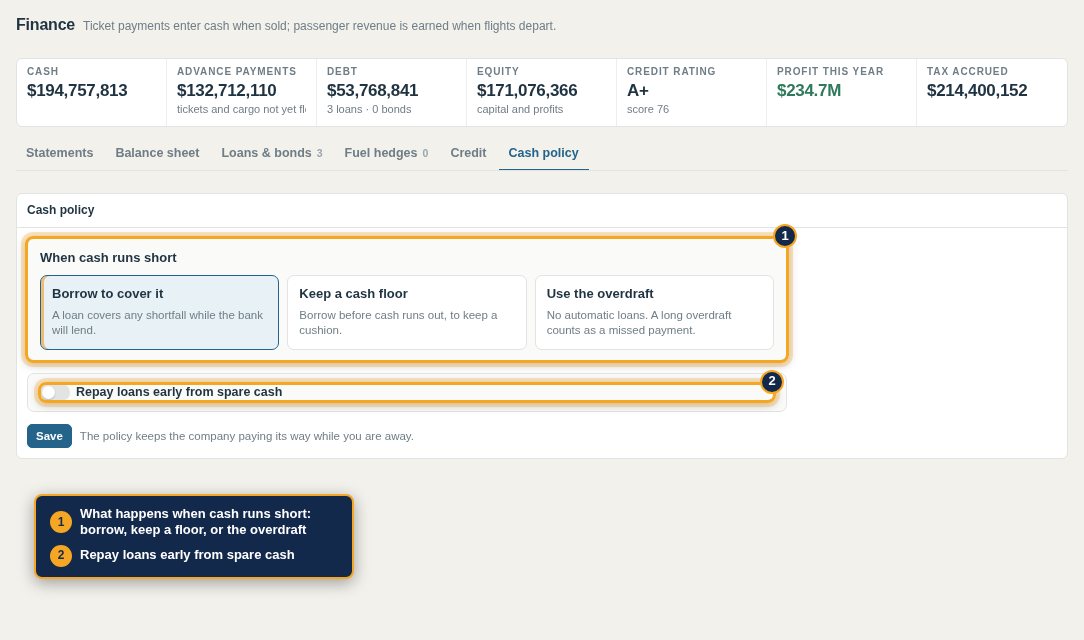
The cash policy decides what happens when cash runs short: borrow to cover it while the bank will lend, borrow early to keep a cash floor, or use the overdraft (a long overdraft counts as a missed payment). It can also repay loans early from spare cash. Missed payments lower your rating; lessors can take back aircraft after repeated ones. A failing airline can go through restructuring, with targets under Credit, or be liquidated.
Leaving restructuring
Open Finance → Credit → Restructuring for your earliest exit date, liquidation deadline and targets. To leave, you must reach that earliest date, have cash of at least $0 and make a total net profit above $0 across the required number of completed calendar months. The current month does not count yet, and earlier losses remain in that total until they fall outside the period. The profit target includes interest, depreciation and tax, so profitable routes or positive cash flow alone may not be enough.
Repaying the creditors' facility does not end restructuring. Loan principal repayments reduce cash, not profit; interest does reduce profit. Adding capital can help meet the cash target, but it is not profit and cannot satisfy the profit target.
Once eligible, you leave automatically at the weekly review. Leave restructuring requests an immediate check using your current cash and completed monthly results; if you cannot leave, it explains why. The displayed target figures are from the last weekly review. Until you leave, restrictions on borrowing, aircraft purchases and dividends remain. If you still fail the requirements at the deadline review, the company is liquidated.