MONEY
Capital, shares & takeovers
Your capital, listing, the share market, buying and selling, dividends, CEOs and leasing companies.
Your capital and your companies
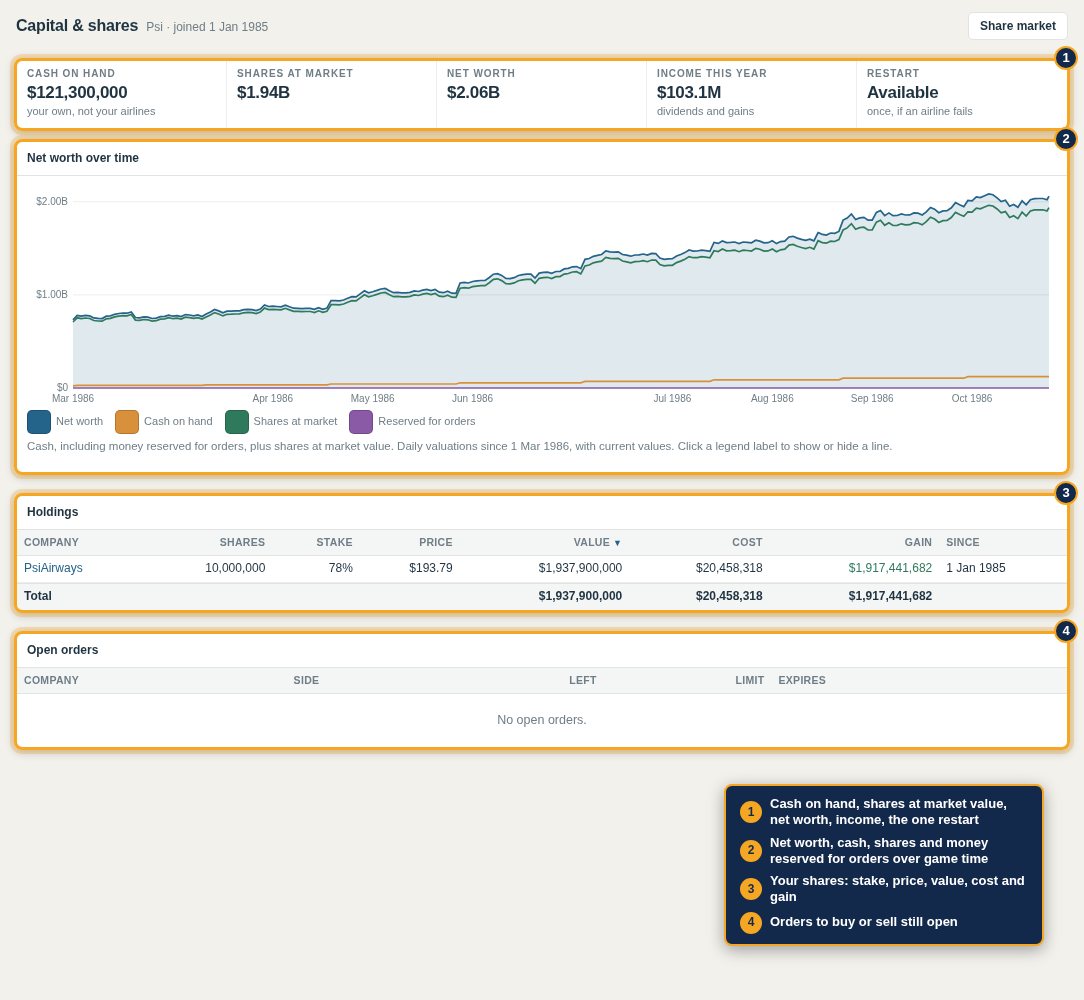
Each player has personal capital in each world, apart from their companies' cash. You invest it in companies, buy shares with it, and receive dividends and sale proceeds into it. Capital & shares shows your cash, shares at market value, net worth, the year's income and whether your one restart is left, with net worth over time, your holdings with cost and gain, and open orders.
Before listing
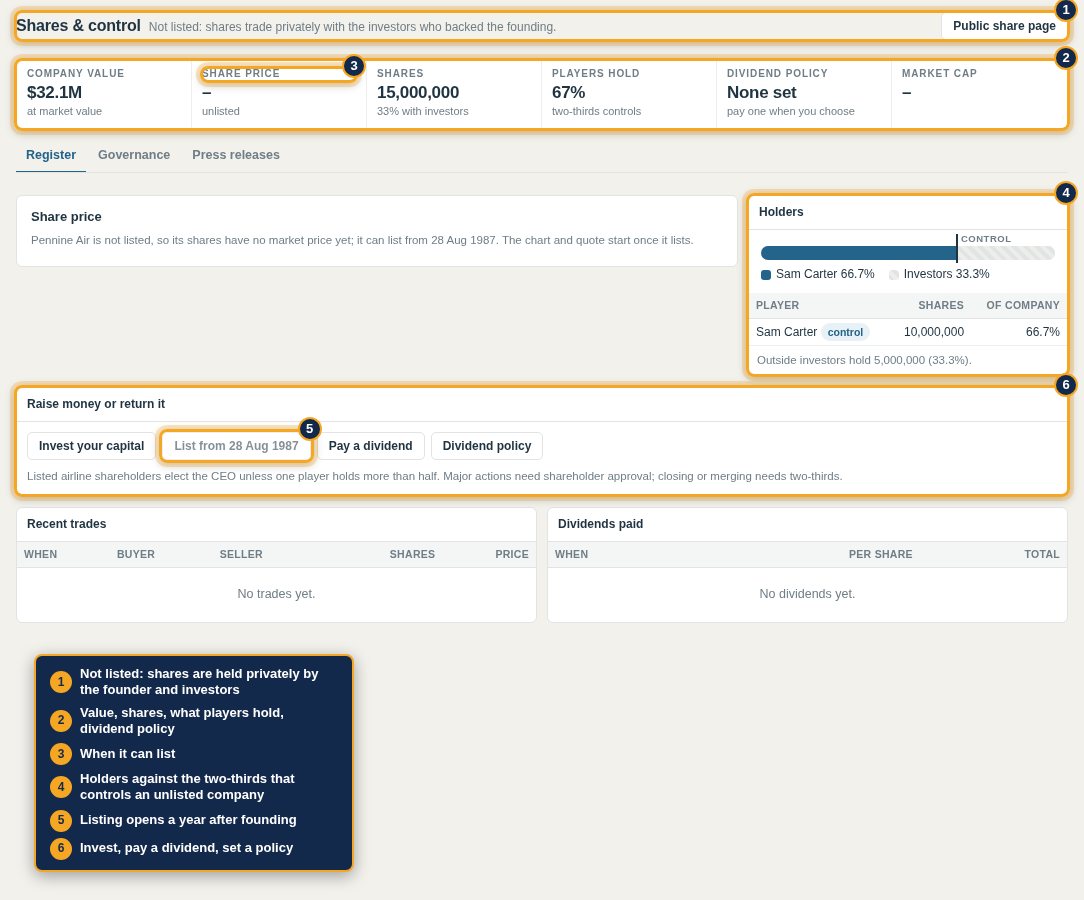
A new company's shares are held by its founder and the investors who backed it, with no market price. Two-thirds controls an unlisted company. A company backed by investors lists on its first anniversary: no new shares are sold, and the investors' shares become those traded on the market. One without them can list a year after founding, selling new shares as it does. Shares & control shows the holders, how to invest more of your capital, pay a dividend or set a dividend policy, and when the company lists or may list.
The share market
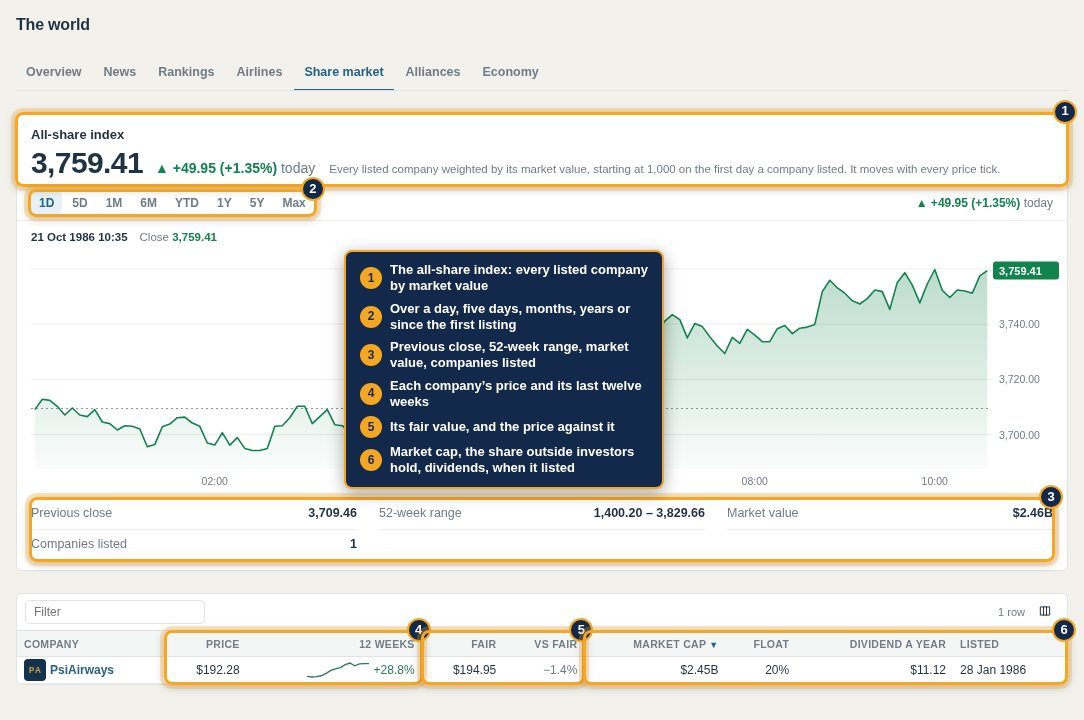
The world → Share market has the all-share index, every listed company weighted by market value from 1,000, and each company's price, its last twelve weeks, the range of investor estimates, market cap, the share outside investors hold, dividends and when it listed.
Every listed company has an order book, and its price is the last trade's. Value, growth and income investors each have their own outlook. Each style includes independent holders with their own cash, shares and investment horizons; holders of the same style also trade with one another. They post orders around what they are willing to pay or accept and take other holders' orders when attractive. A larger order moves through more prices. Buying uses real investment budgets; reposting orders does not refill them. Sales, dividends and gradual new fund subscriptions finance further buying. There is no single correct price that the market must return to.
Their estimates forecast sustainable operating earnings from quarterly accounts. Value investors give more weight to recoverable assets; growth investors put more weight on recent results and expansion; income investors favour dependable, covered dividends. Expansion needs investment, old fleets need replacement, and unusually high margins attract competition. Cash and investments are counted separately, with liabilities deducted. Fuel prices, interest rates and public capital changes can alter estimates between reports. Young or inconsistent companies leave more uncertainty. The quote explains each opinion, including whether the latest margin beat or missed its expectations.
The analyst range is the lowest and highest of these opinions, not a guarantee that shares will trade inside it. An airline that stops flying has its operating business marked down gradually; its cash is not marked down merely for being idle. Flying again clears that operational markdown over a few weeks.
A company's quote
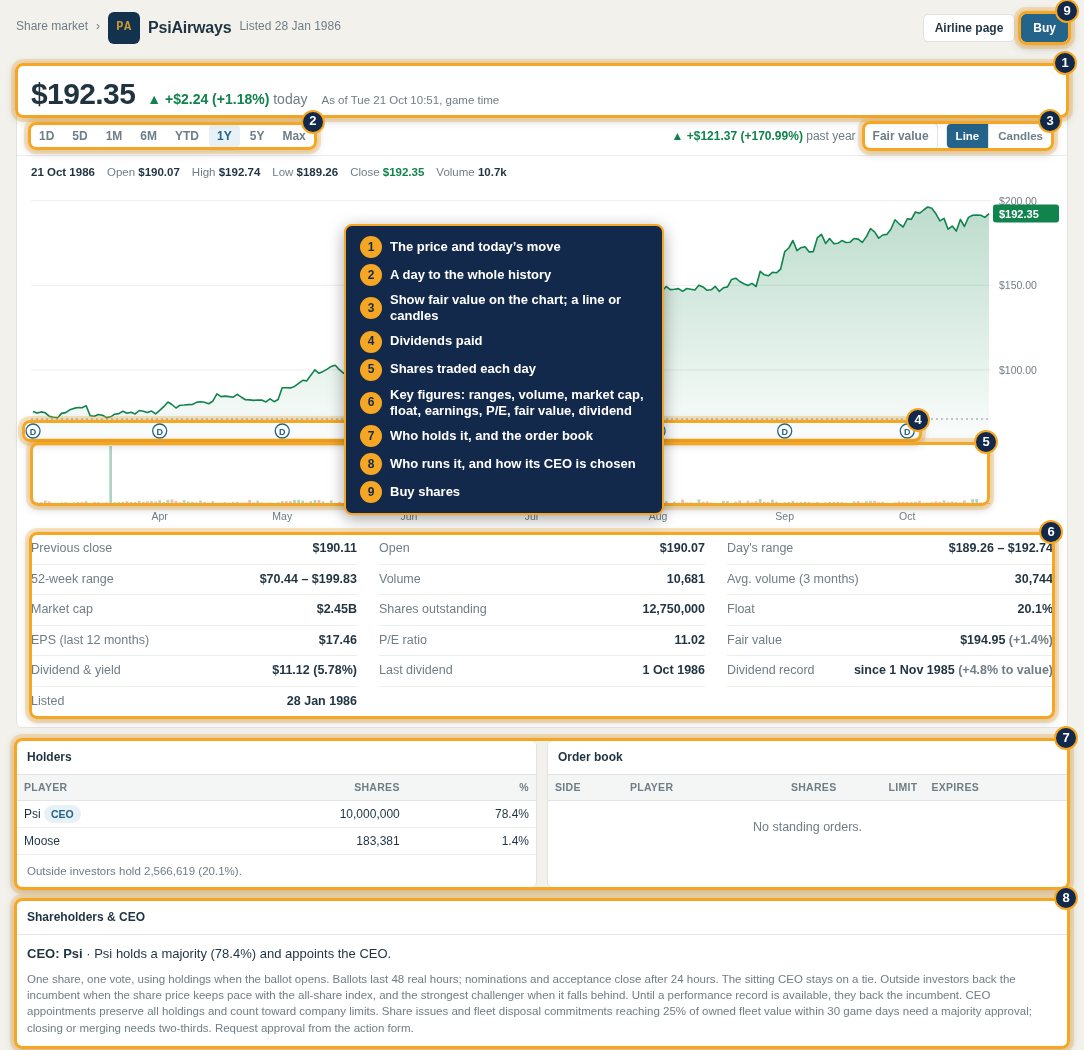
Every listed company has a quote: its price and today's move, a chart over a day, five days, months, years or its whole history as a line or candles, with the recorded analyst range, dividends and volume, and its key figures: previous close, ranges, volume, market cap, shares and float, earnings per share and P/E, analyst estimates, dividend and yield, and its dividend record. Below are its holders, the order book, and who runs it.
Buying shares
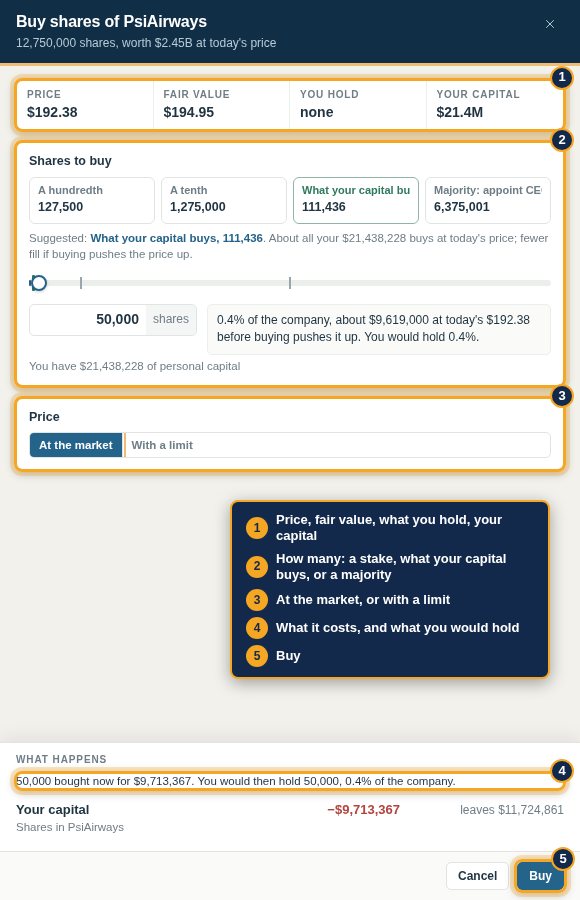
Buy places an order: how many (a small stake, what your capital buys, or a majority), at the market or with a limit, and how long it stays open, and says what trades at once and at what average price, and what you would hold. Orders that cross always trade, best price first and then the first placed, at the price of the order standing; only your own buy and sell never meet. A limit order takes what it reaches in the book at once and the rest stands at its price, taking what outside investors offer within it as their orders come back, until other orders reach it. An order at the market takes what stands within 5% of the best available price, at once and as their orders come back. Investors refresh orders as their remaining cash and shares allow; trading impact fades over weeks. Splitting an order does not guarantee a better price. A buy order holds your capital until it fills or ends; at the market, a rising price takes the difference from your capital as it fills. Sell works the same way. The company's share page shows the book, the orders standing nearest the price on each side, and Capital & shares shows each order's progress. A player's own companies cannot trade each other's shares.
Takeover offers
Takeover offer buys many shares at once. You offer a price a share for up to a number of shares, and your capital for all of them is held while the offer stays open, a day of real time, so every holder can answer. Players accept with their shares on the company's share page; outside investors decide at the close, accepting with as many of their shares as they would sell at the premium over the price before the offer and over what the company is worth then: about a fifth of them at 10%, 63% at 20%, nearly 90% at 30%. At the close you buy every share accepted, the same share of each holder's if more were accepted than you offered for. An offer can go ahead only if you then hold a majority or two-thirds; otherwise it lapses and nobody sells. While it is open the price holds just below the offer, and only a higher offer can replace it.
Running a listed company
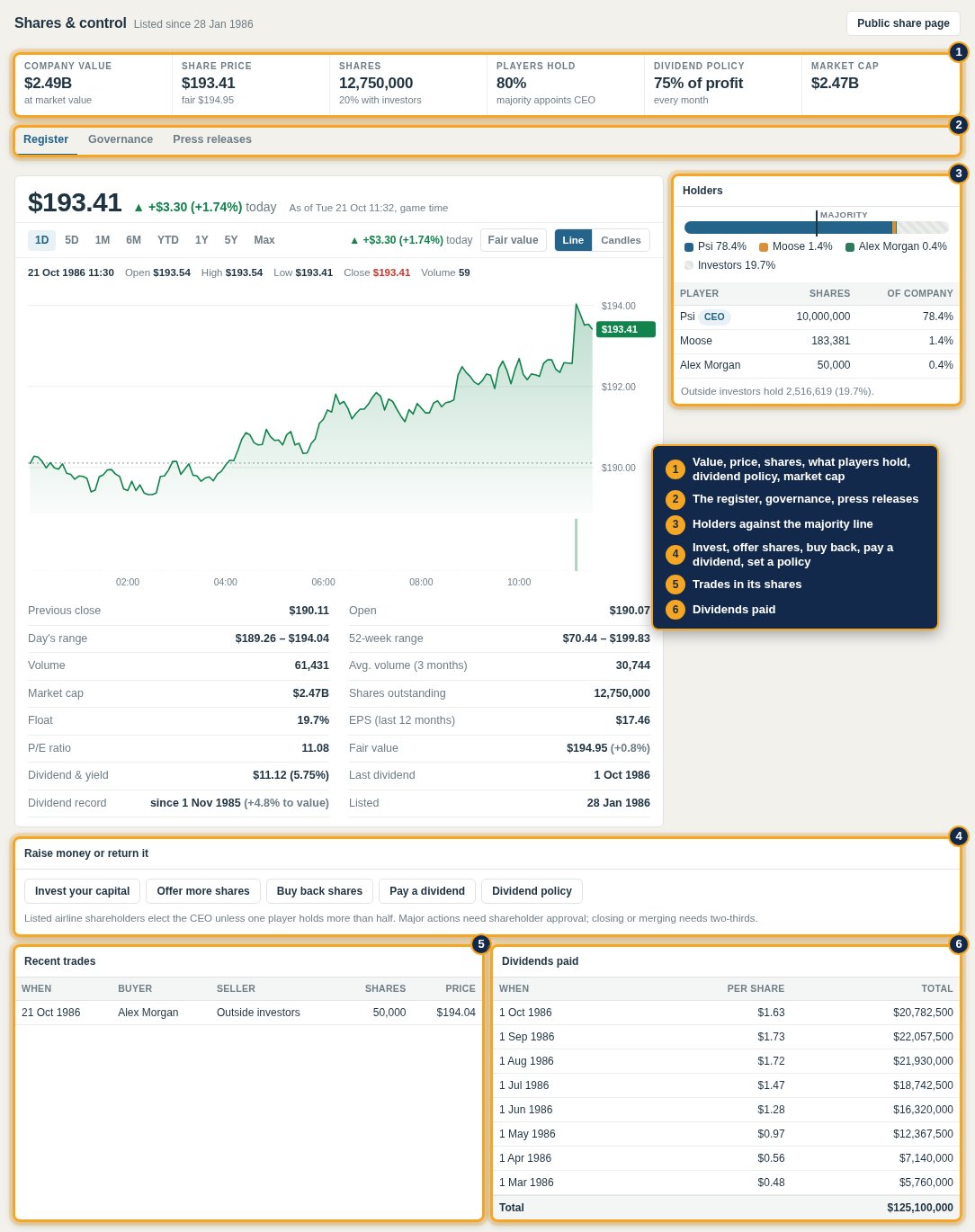
For a listed company, Shares & control shows holders against the majority line, and ways to raise money or return it: invest your capital, offer more shares, buy back shares, pay a dividend, or set a dividend policy. A buyback is the company's order in the book, paid from its cash as it fills; it trades with any holder, the controlling player included, and the shares it buys are cancelled. It lists trades in its shares and dividends paid.
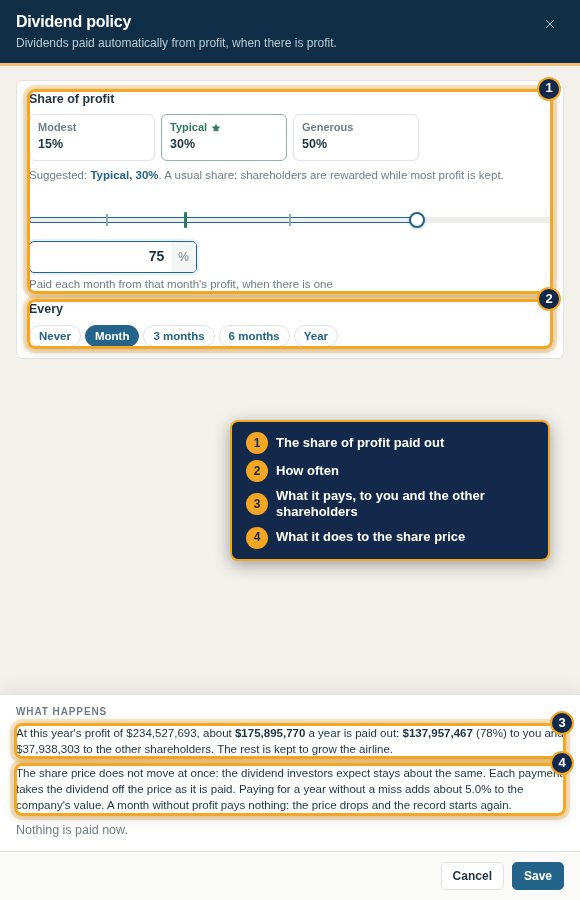
A dividend policy pays a share of each period's profit; every company starts at 15% of its profit each quarter until its controller changes it. The sheet says what it pays to you and to other shareholders. A policy announcement does not automatically lift the price. Income investors favour a record of covered payments; growth investors consider whether retaining the cash would earn more. Each payment removes that cash from the company and its share price.
CEOs and shareholders
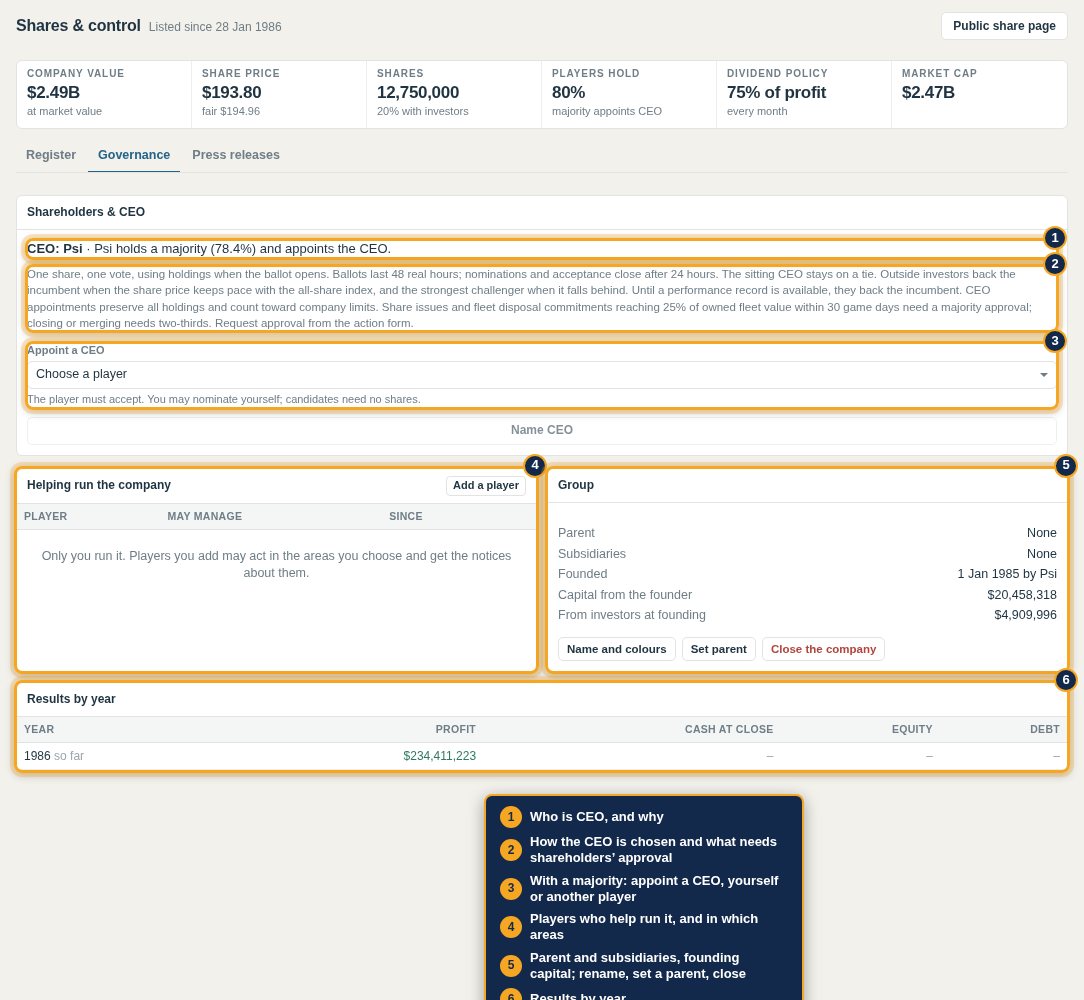
In a listed airline, a player holding more than half the shares appoints the CEO: themselves or another player, who must accept. Otherwise shareholders elect a CEO each year, one share one vote; holders with 10% between them can call an extraordinary meeting. Outside investors vote too: they back the sitting CEO while the share price keeps pace with the all-share index, and the strongest challenger when it falls behind.
Share issues and disposals of a quarter or more of the owned fleet's value within 30 days need approval from more than half of all shares; closing or merging needs two-thirds. A CEO who holds the stake needed approves directly.
Takeovers
Buying a majority of a listed airline makes the buyer its CEO. A company can be set as another's subsidiary, kept under its own brand or absorbed. A player who loses an airline keeps their shares and capital and can found another airline or a leasing company in the same world.
Leasing companies
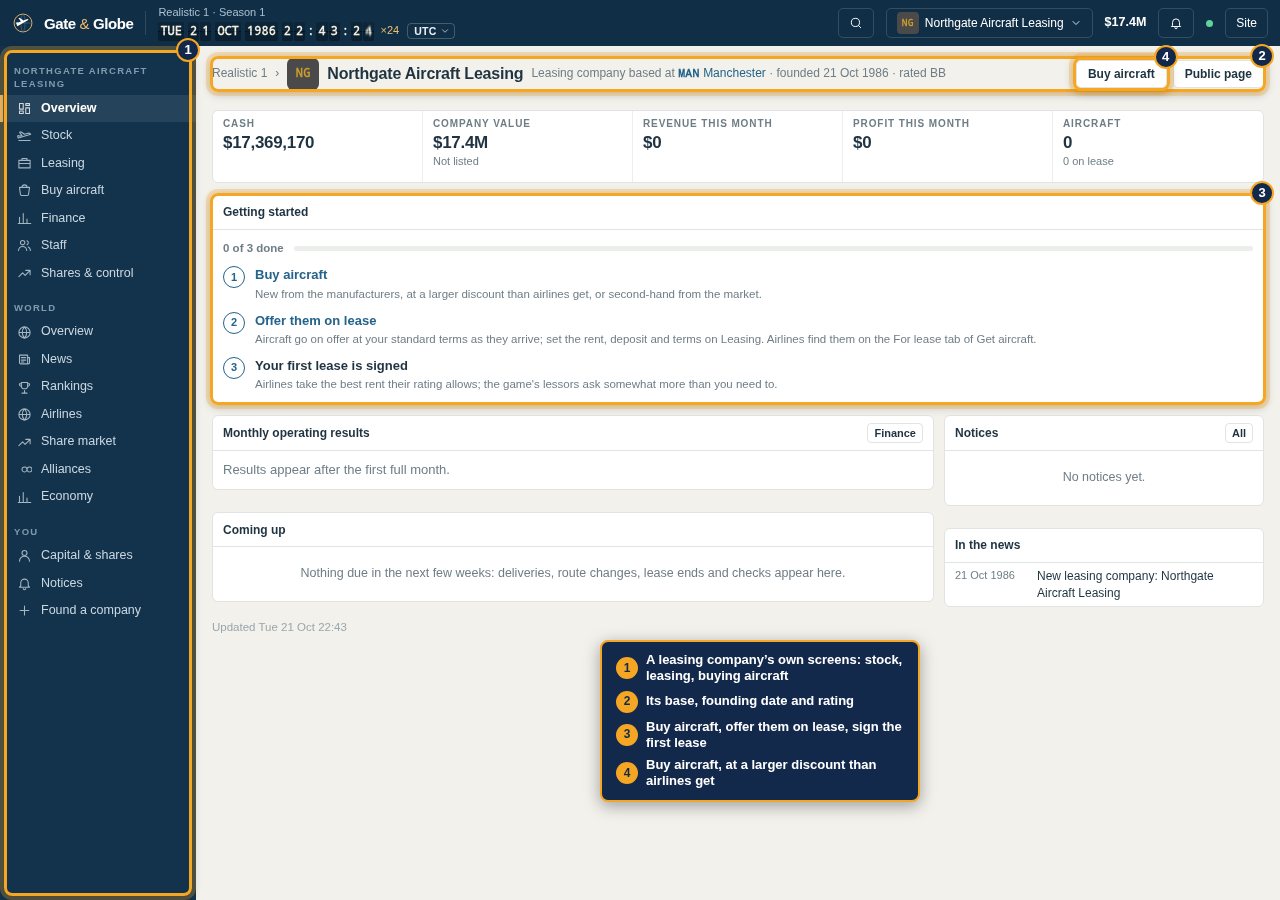
First Officers and Captains can found leasing companies where the world allows them. A leasing company buys aircraft new, at a larger discount than airlines get, or used, and offers them on lease at its own rent, deposit and terms; airlines find them under For lease. Its screens are its stock, leasing, buying aircraft, finance, staff and shares. If a First Officer's membership lapses, the company keeps its leases but cannot buy or sign new ones until it is renewed.
Fair play
One account per person. A player's own companies cannot trade shares with each other.
Margin, short selling, lending, options and the bond market are in Margin, shorts, options & bonds.