START HERE
5. Growing past one aircraft
When to grow, more aircraft, planning ahead of deliveries, a second family, new bases and hubs.
This is part 5 of the walkthrough. Pennine Air's one ATR is full on every flight.
Step 1: Decide when to grow
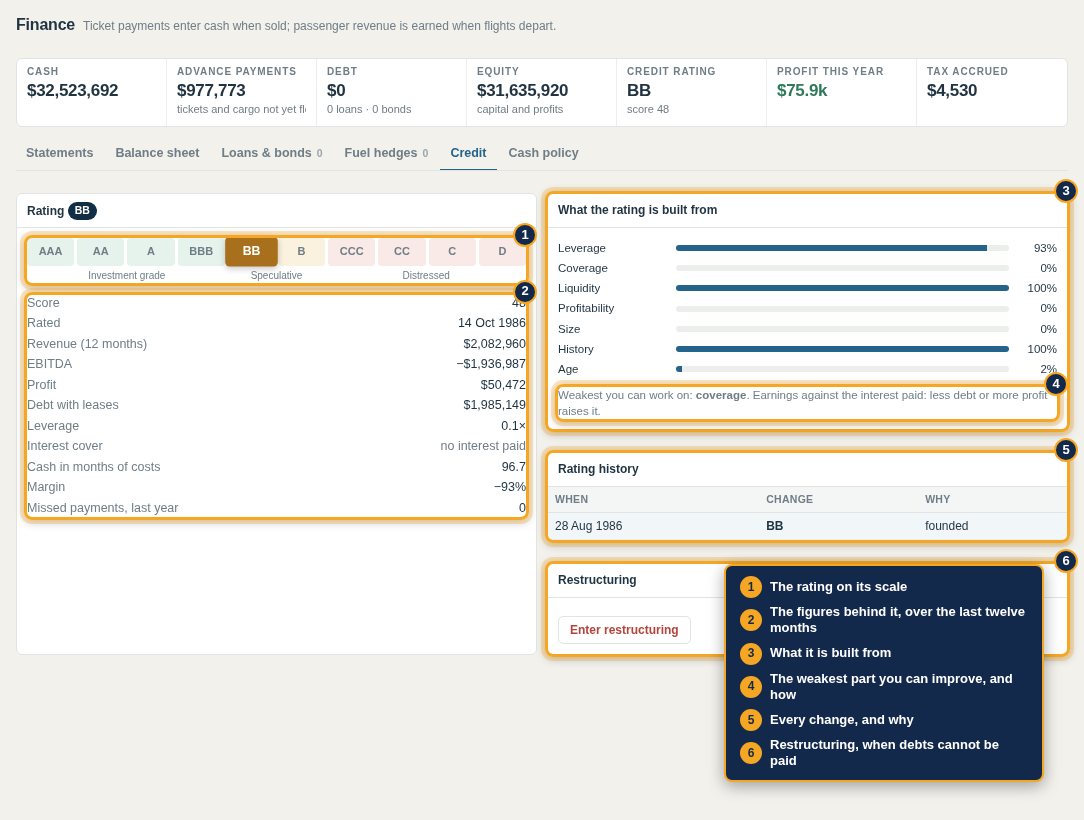
Grow when your aircraft are busy, their routes make money, and your cash can carry another aircraft while its routes build up. Finance → Credit shows your rating on its scale, the figures behind it over the last twelve months, what it is built from, the weakest part you can improve and how, and every change. A young airline's months are scaled to a year, so its first figures swing.
Step 2: Know what you can borrow
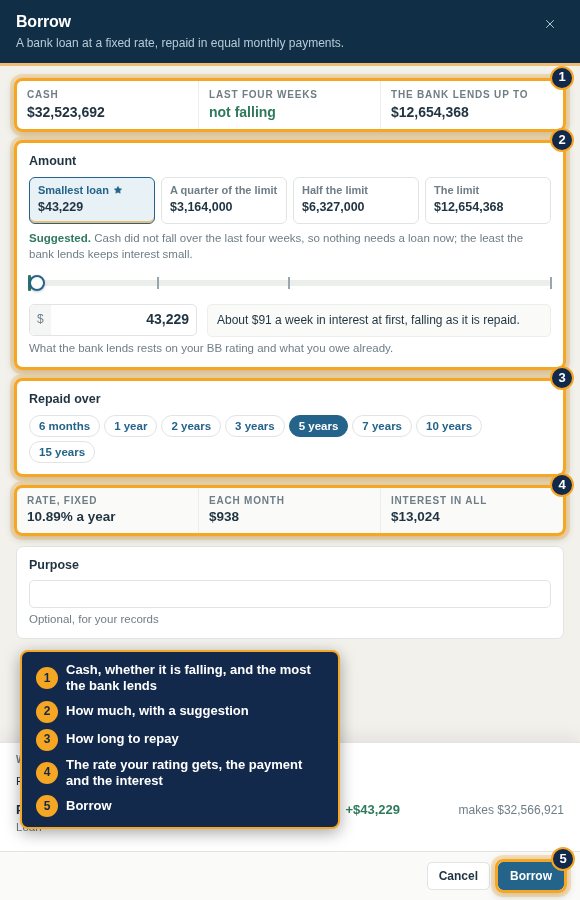
Borrow, under Finance → Loans & bonds, shows your cash, whether it is falling, and the most the bank lends at your rating; choose how much and over how long, and it shows the fixed rate, the payment and the interest in all. Lessors and the aircraft order sheet show what leasing would take instead.
Step 3: Order more of the type
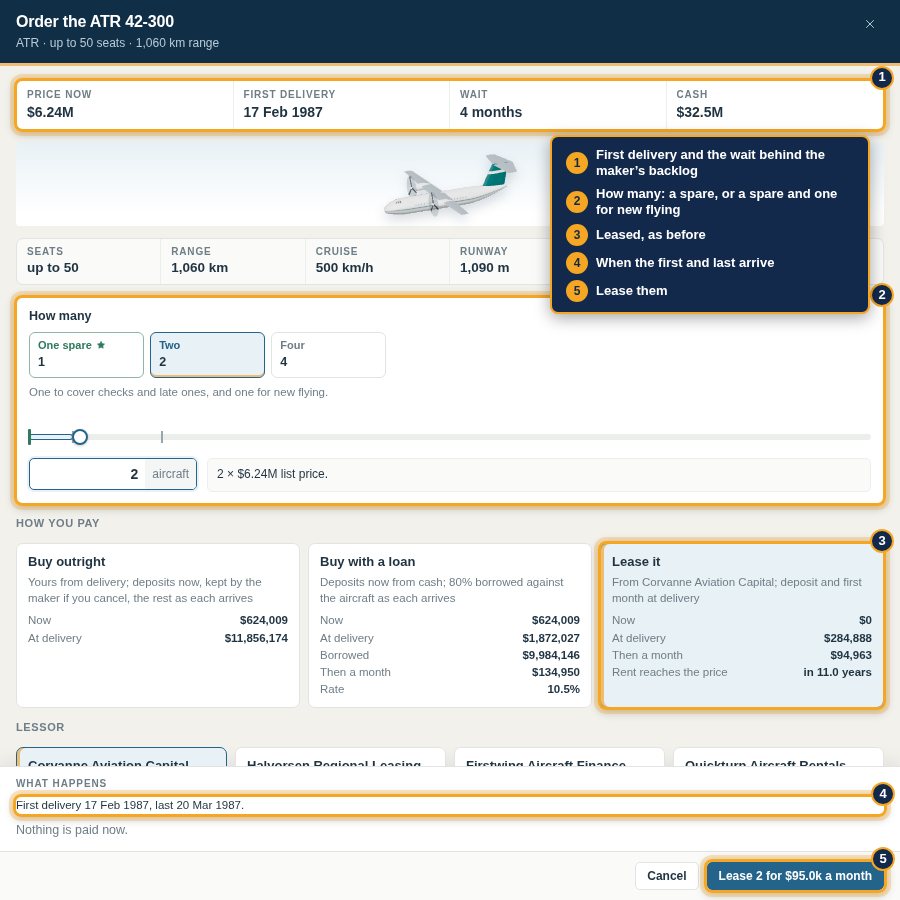
Another aircraft in Needs attention opens an order for the fleet's own type, suggesting a spare to cover late aircraft and checks, or a spare and one for new flying. New aircraft join the fleet's cabin, base and crews. Only a new airline's first order comes from stock; later ones wait behind the maker's backlog.
Pennine Air leases two more ATR 42-300s from Corvanne. The wait is now four months: the first arrives on 17 February 1987.
Step 4: Plan the new flying now
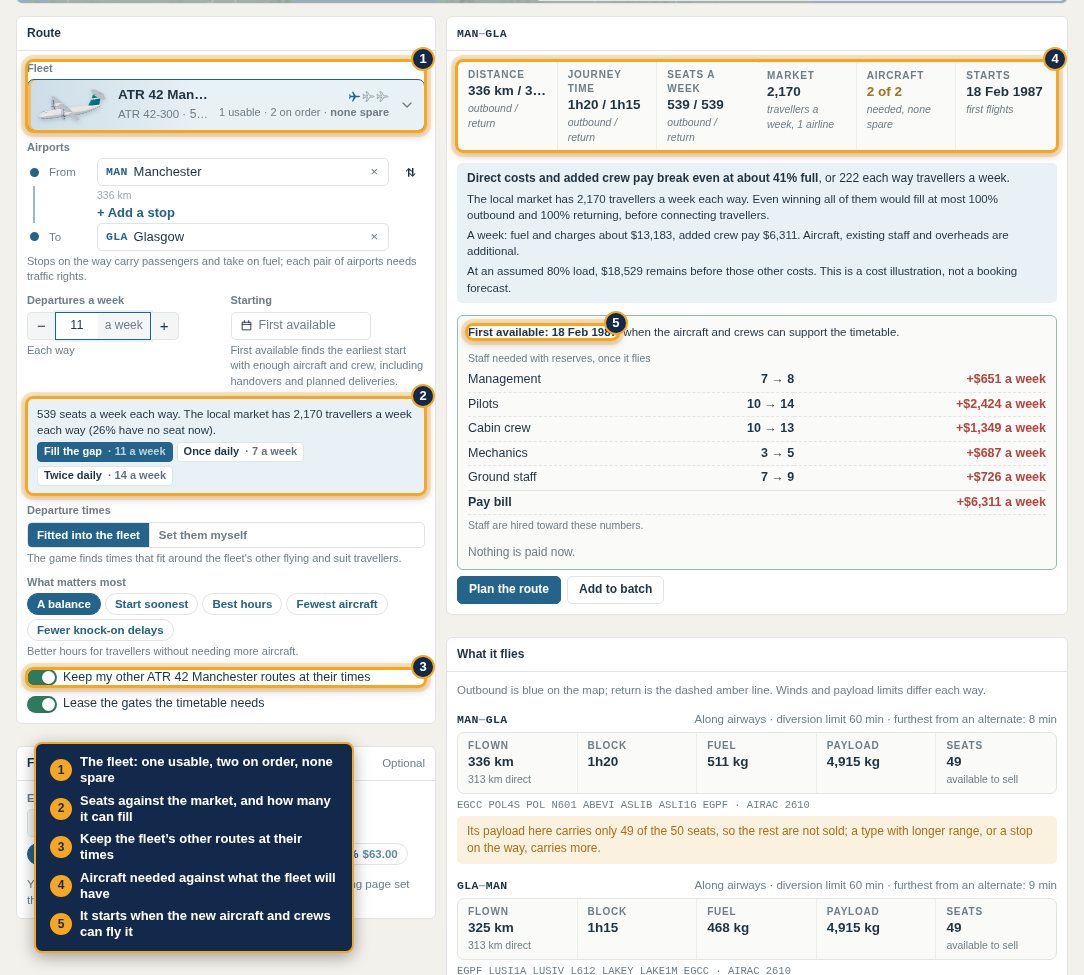
Routes can be planned on aircraft not yet delivered. The planner counts the fleet's aircraft on order, keeps its other routes at their times, and starts the route when the aircraft and crews can fly it. Crews start hiring when you plan it, so they are ready with the aircraft.
Pennine Air plans Manchester–Glasgow, 11 departures a week, enough to seat the travellers who have no seat today, from 18 February 1987.
Step 5: A second family
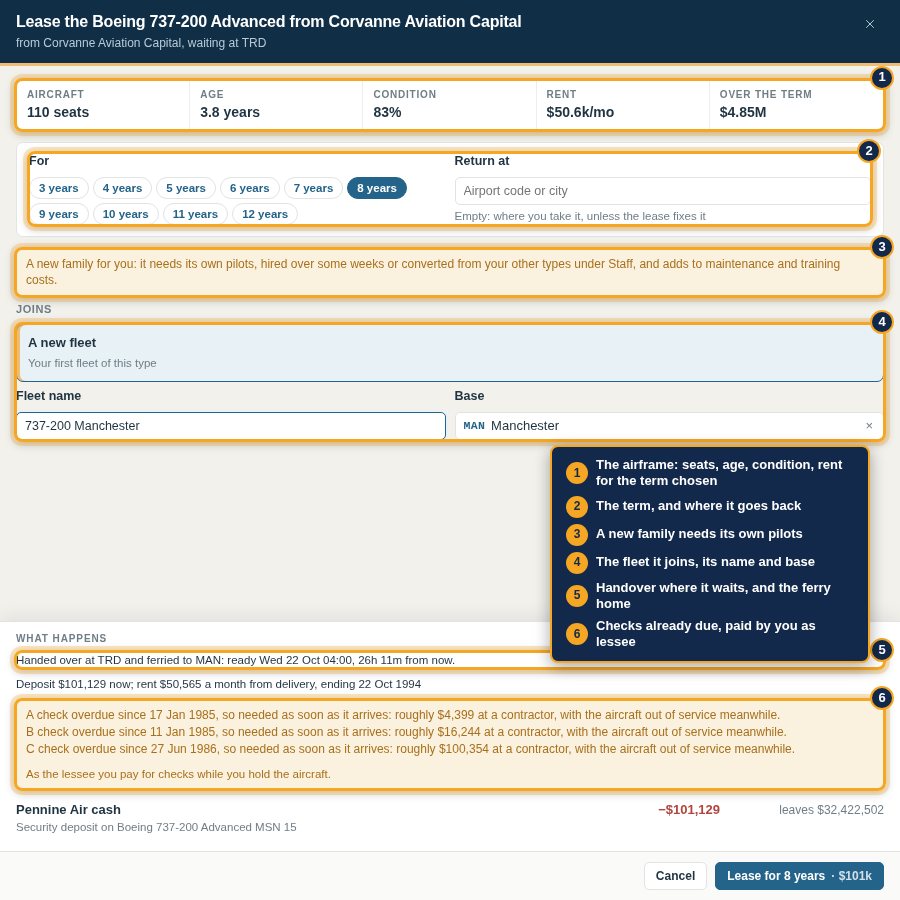
A new family needs its own pilots, and adds training and maintenance costs to the whole airline. Add one when it serves markets your family cannot. Used aircraft arrive within days: Get aircraft → For lease and Used for sale list airframes with their age, hours, condition and where they are. The sheet says where it is handed over and when it reaches your base, and which checks are already due, which you pay for as lessee.
London fills three ATRs a day, so Pennine Air leases a 3.8-year-old Boeing 737-200 Advanced waiting at Trondheim, 110 seats, for eight years at $50,565 a month. It needs A, B and C checks on arrival.
Step 6: Pilots for the new type
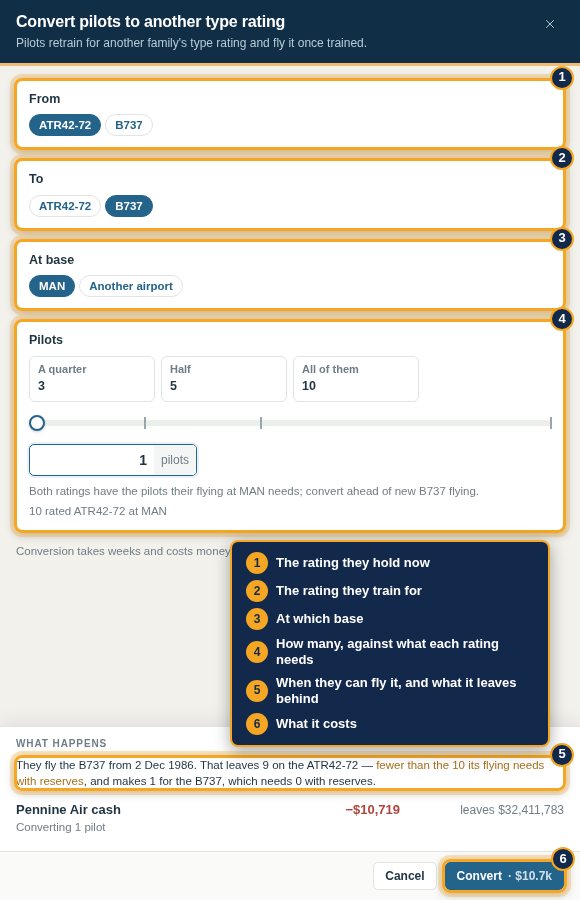
Staff → Convert pilots retrains pilots from one type rating to another at a base, and says when they can fly it and what it leaves behind. Automatic hiring also retrains or moves crews when that is quicker than hiring.
Converting one ATR pilot to the 737 costs $10,719; they can fly it from 2 December 1986.
Step 7: A new base
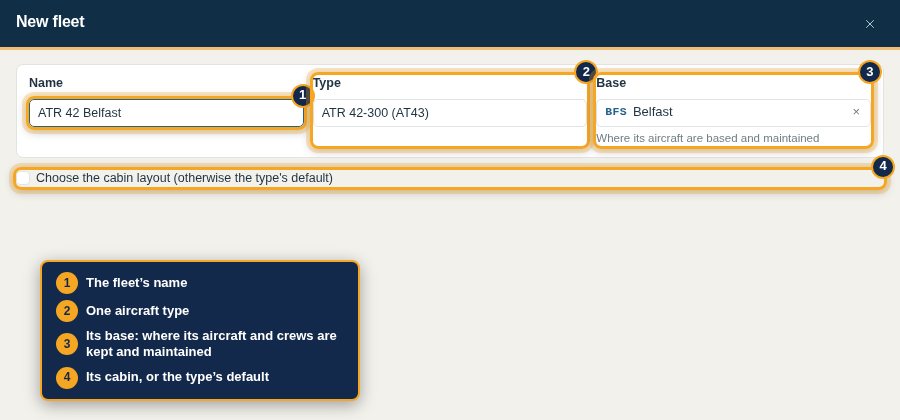
A base is where a fleet's aircraft and crews are kept and maintained. A second base serves another region without positioning aircraft every day. Under Fleet, New fleet creates one with its type, base and cabin; its crews are hired there, and Staff → Move crews moves crews between bases.
Step 8: A hub, when it pays
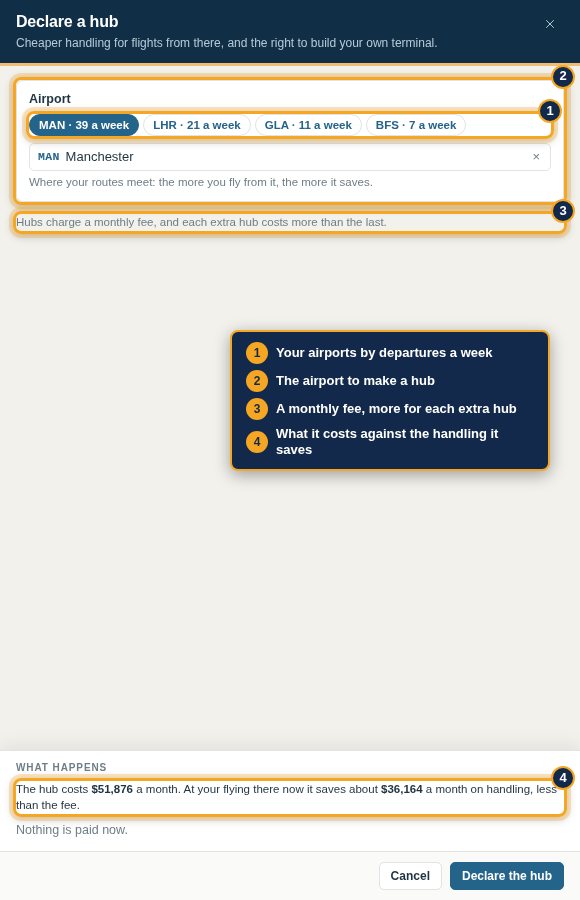
Under Airports & slots, Declare a hub at the airport your routes meet: flights from it pay less for handling, and you may build a terminal there. The sheet lists your airports by departures and compares the monthly fee with what it saves. Each extra hub costs more than the last. Travellers connect between your flights wherever the timetable gives them a workable connection, if you sell connections (Product & marketing).
At Manchester the hub would cost $51,876 a month and save about $36,164, so Pennine Air waits until it flies more from there.
Step 9: Watch it fly
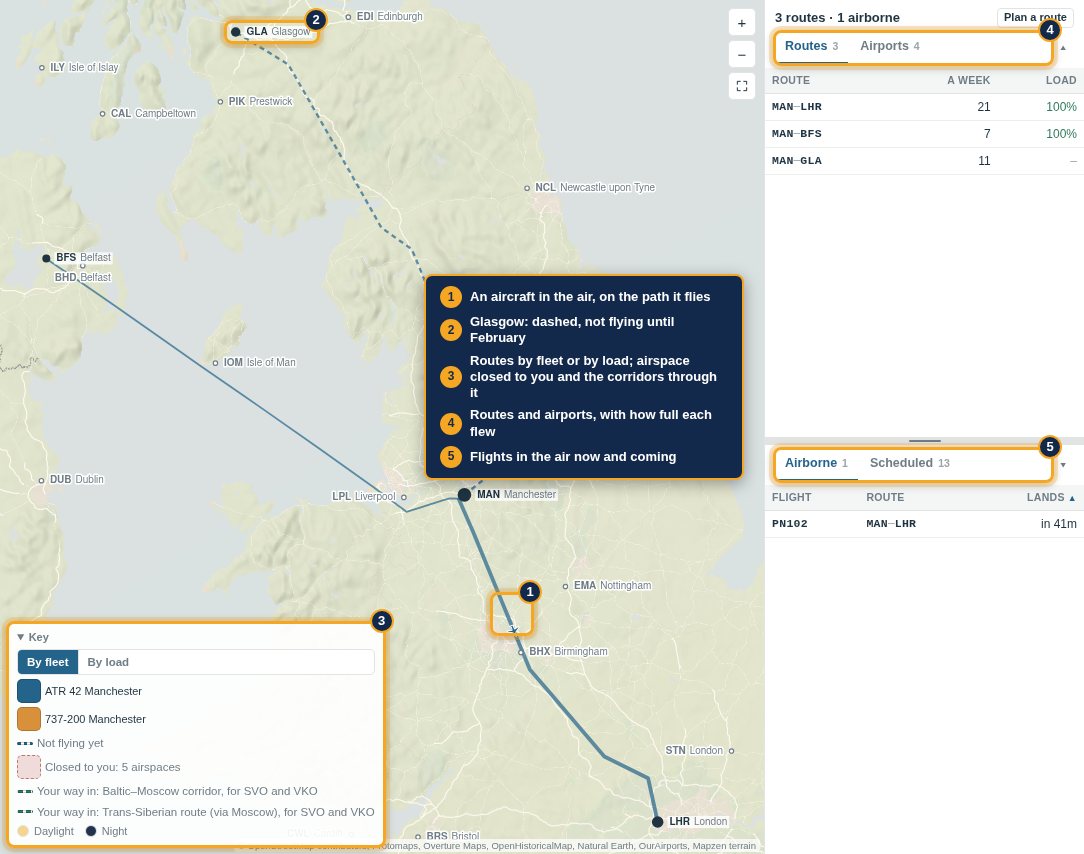
Network map shows your routes in your colours by fleet or by load, routes not flying yet dashed, aircraft in the air on the paths they fly, and airspace closed to you with the corridors through it. Beside it are your routes and airports, and the flights in the air and to come.
From here the game opens up:
- How a season plays: a typical visit once the airline runs.
- Cabins & service: a product travellers choose.
- Alliances & partners: other airlines' networks.
- Capital, shares & takeovers: listing your airline and investing in others.
- Margin, shorts, options & bonds: borrowing to invest, betting on a fall and trading bonds.