MARKETS
Passengers & demand
Where demand comes from, how travellers choose, connections and booking ahead.
Demand comes from real travel
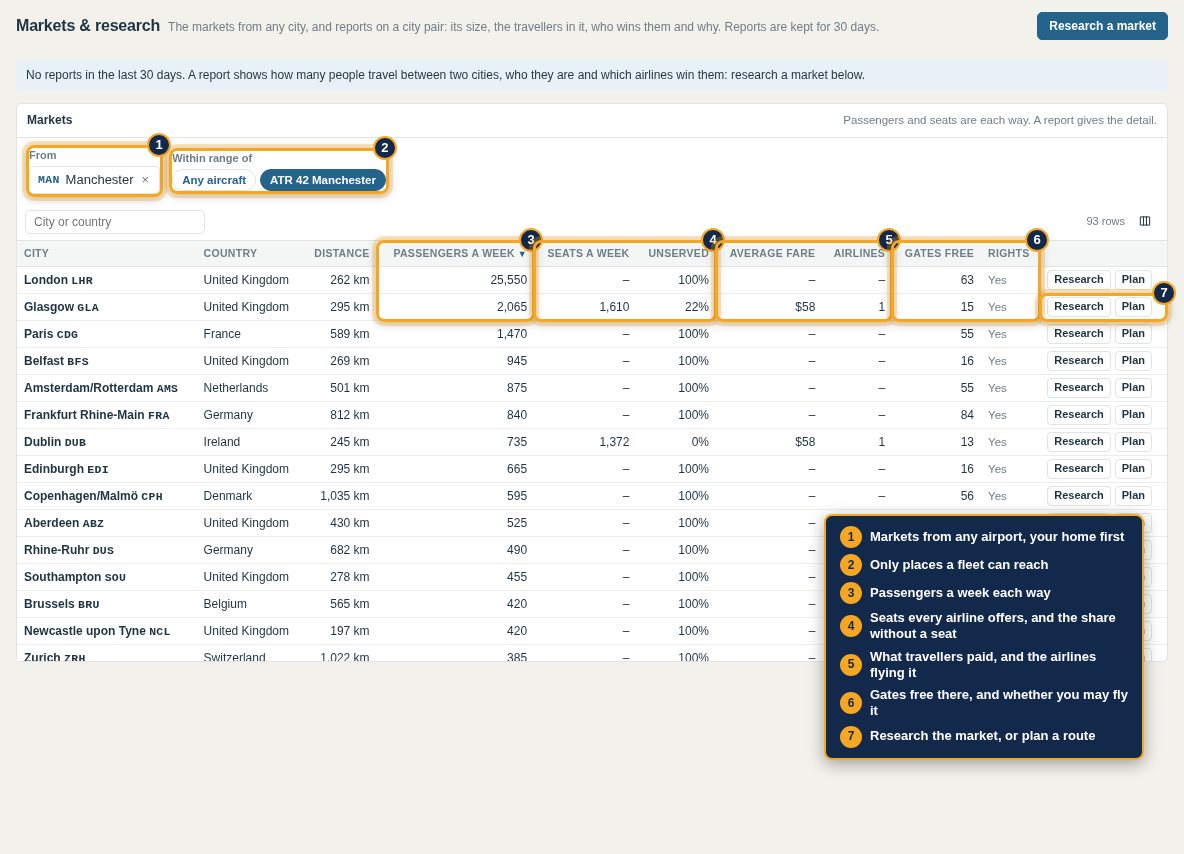
Demand runs between every pair of cities. Each city's journeys follow its airports' real traffic and history and its people's numbers and wealth. Travel abroad grows with income and family ties, and is near shut across closed borders; trips at home compete with road and rail, and with high-speed rail where its lines reached. Adding seats does not create travellers; seats beyond demand fly empty.
Nonstop service grows a city pair's travel over the following months, up to double where airlines carry much of it, as a convenient flight makes trips easy; it fades slowly after service stops.
How travellers choose
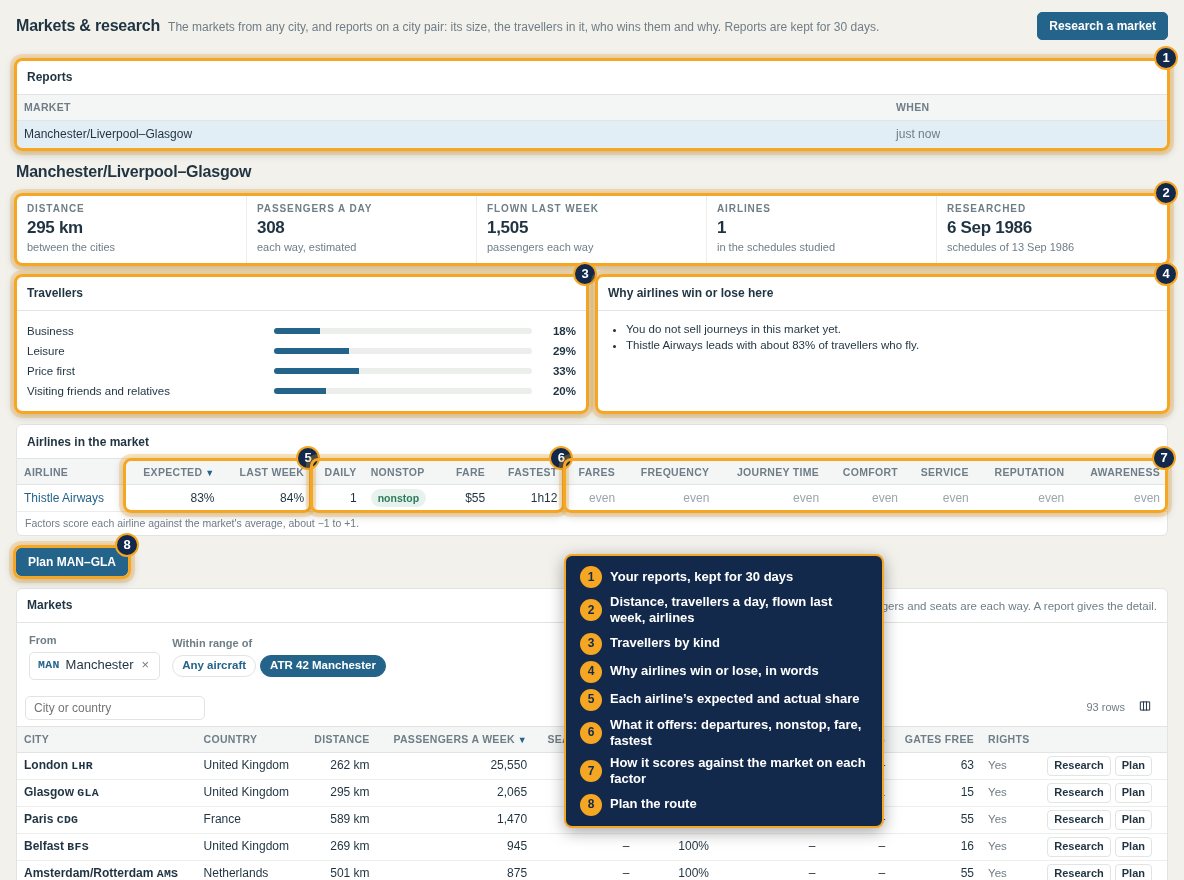
Travellers look at nonstop, one-stop and connecting itineraries. They come in kinds that value different things: business travellers care about frequency, timing and comfort; leisure travellers are flexible; price-first travellers take the lowest fare. Airlines win them on fare, frequency, journey time, service, comfort, reputation and awareness. Price sways only part of the market, so an established airline keeps much of its share against a cheaper newcomer.
Connections
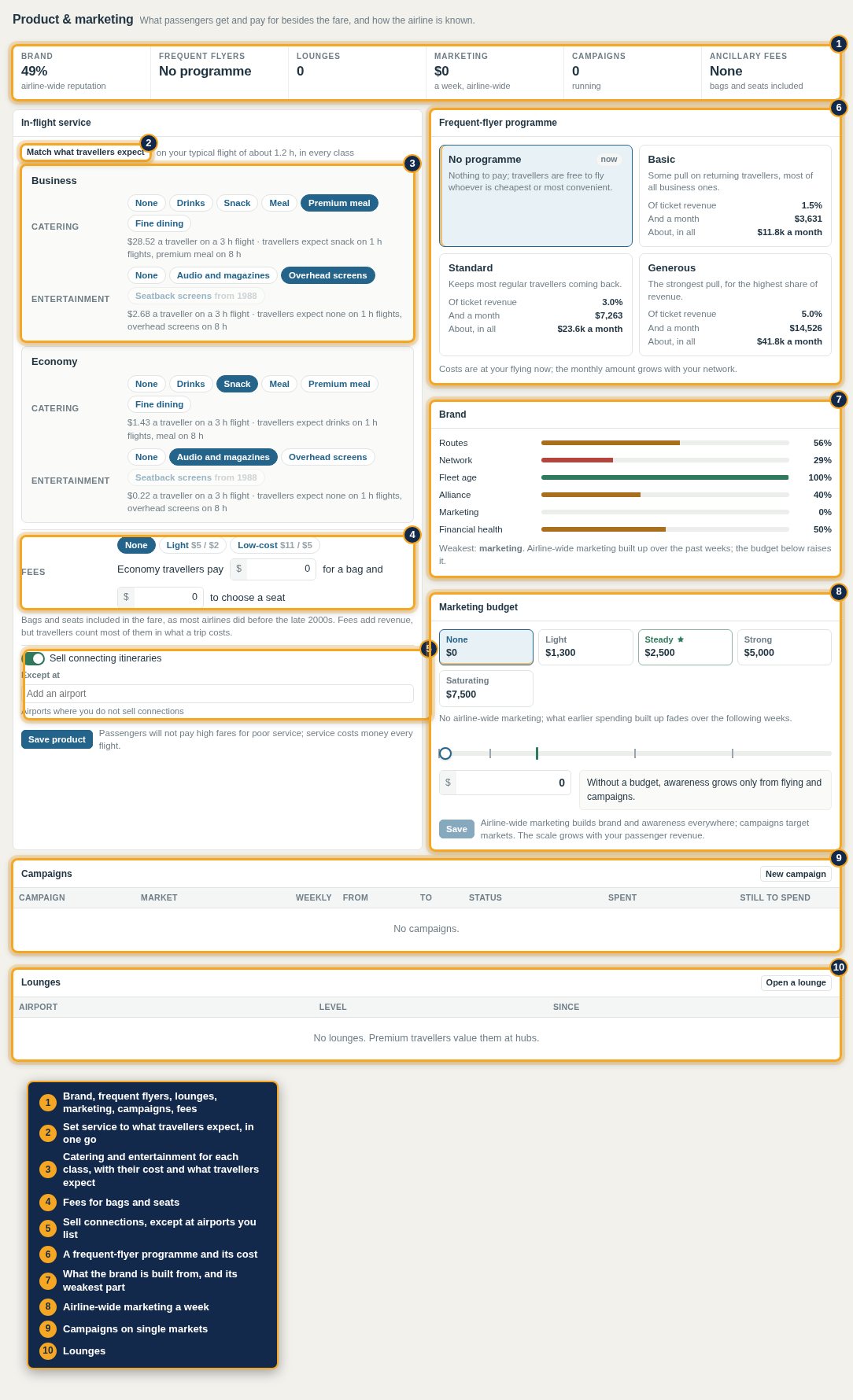
Travellers connect across your network wherever the timetable gives them a workable connection, if you sell connecting itineraries. A connection against a nonstop decides which option they take, not whether they fly: a city reached only by connecting still sends its travellers. Connections between airlines need an alliance, or companies you control.
Booking ahead
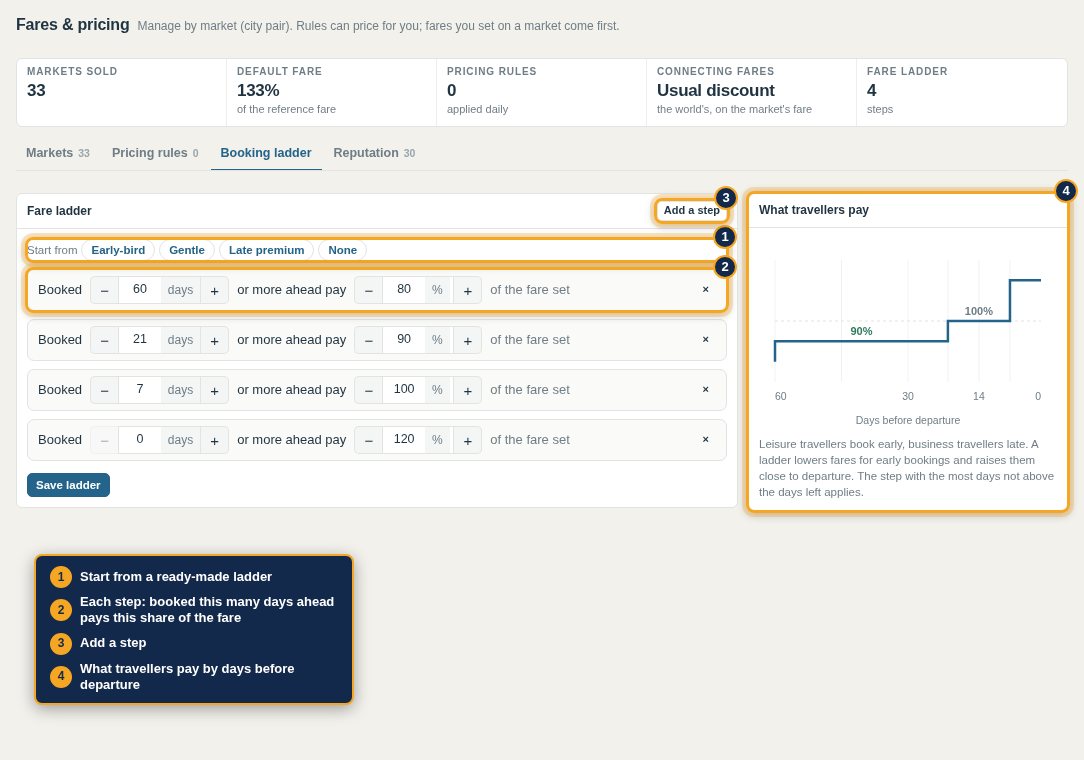
Flights sell for weeks before they leave. Leisure travellers book early and business travellers late, so a flight fills over the weeks before departure, and once it is full, later travellers turn elsewhere. Fares & pricing → Booking ladder lowers fares for early bookings and raises them close to departure: each step is a share of the fare set, for bookings that many days ahead or more.
New routes take time
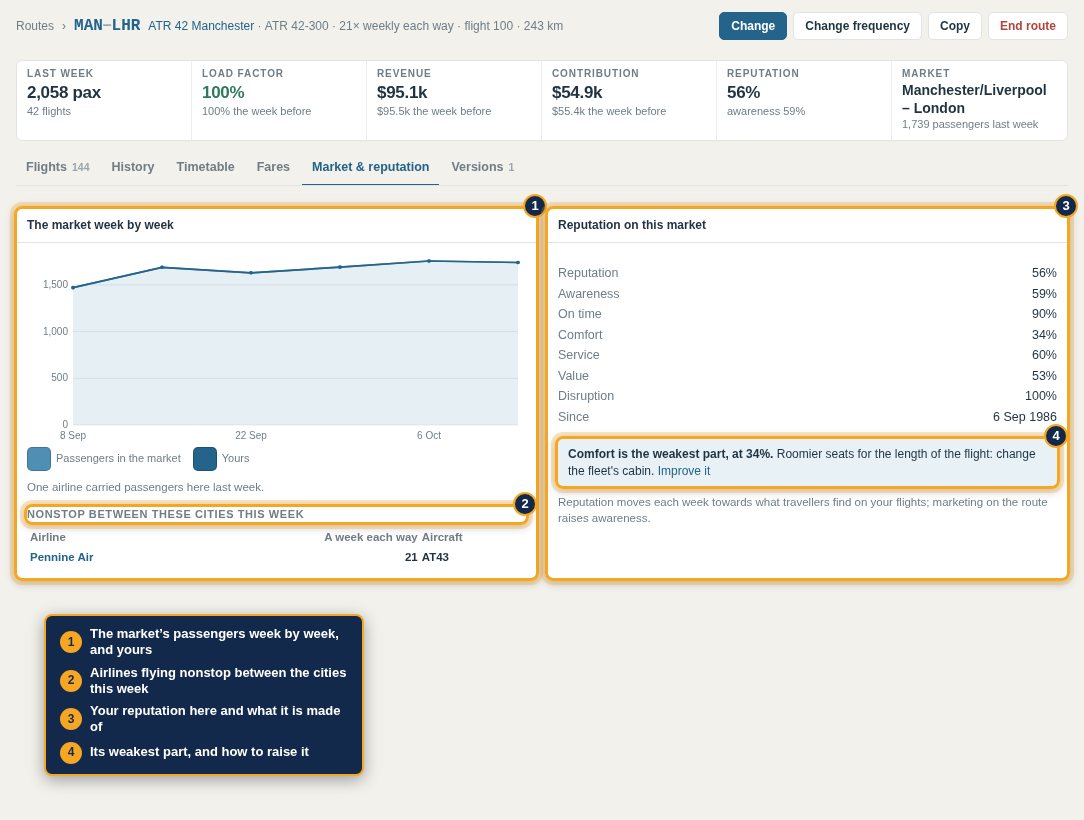
A new route builds its travellers as they learn about it; marketing helps. Expect a route's first weeks to understate it, and read the market tab rather than its first loads.