START HERE
4. Your first months
What runs while you are away, your daily check, reading a route, and what to change.
This is part 4 of the walkthrough. Pennine Air's flights to London and Belfast have started.
What happens while you are away
The world runs whether or not you are signed in:
- Flights depart and arrive on their timetables; travellers choose between every itinerary open to them.
- Revenue from tickets, fees and freight comes in; fuel, airport fees and handling go out.
- Aircraft gain hours and cycles and go to their checks.
- Staff are hired toward what the operation needs, and some leave.
- Deliveries arrive.
Each game month, rents, loan payments, gate rent and salaries are paid, and your credit rating is reviewed. If the server stops, the world catches up when it returns.
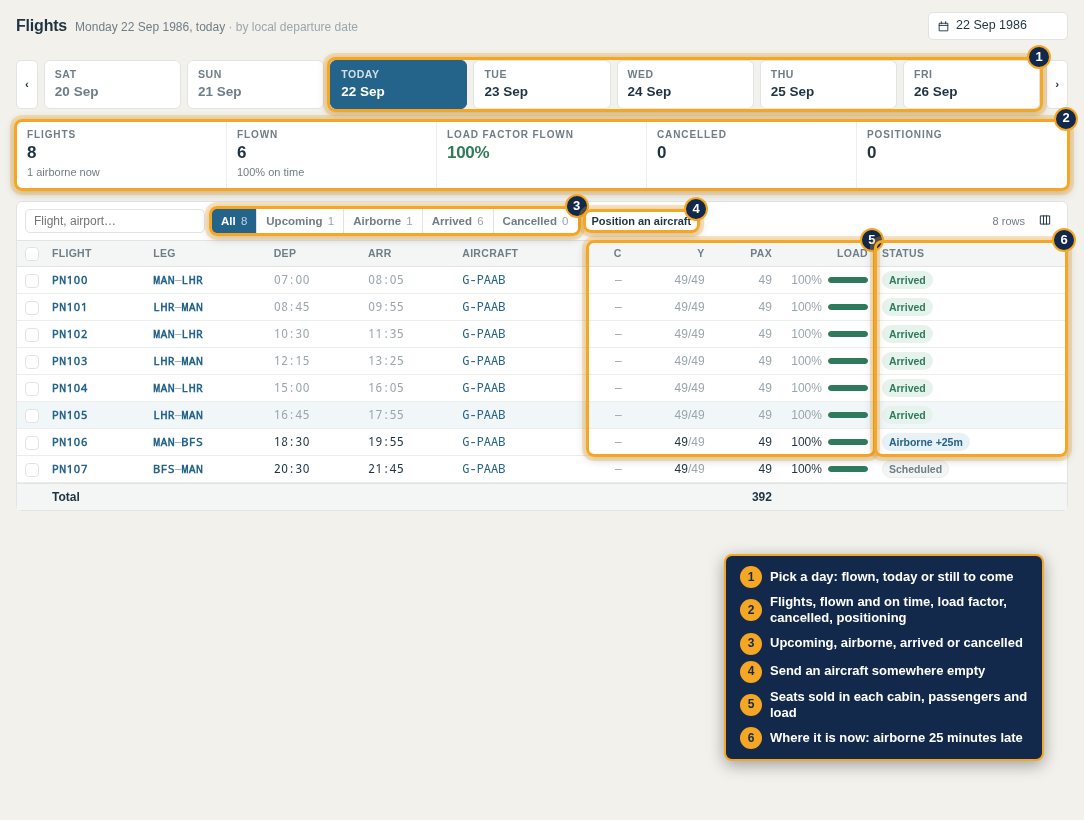
Flights shows a day's flights: pick a day, filter by upcoming, airborne, arrived or cancelled, and see seats sold in each cabin, load and status, such as airborne and 25 minutes late.
Your daily check
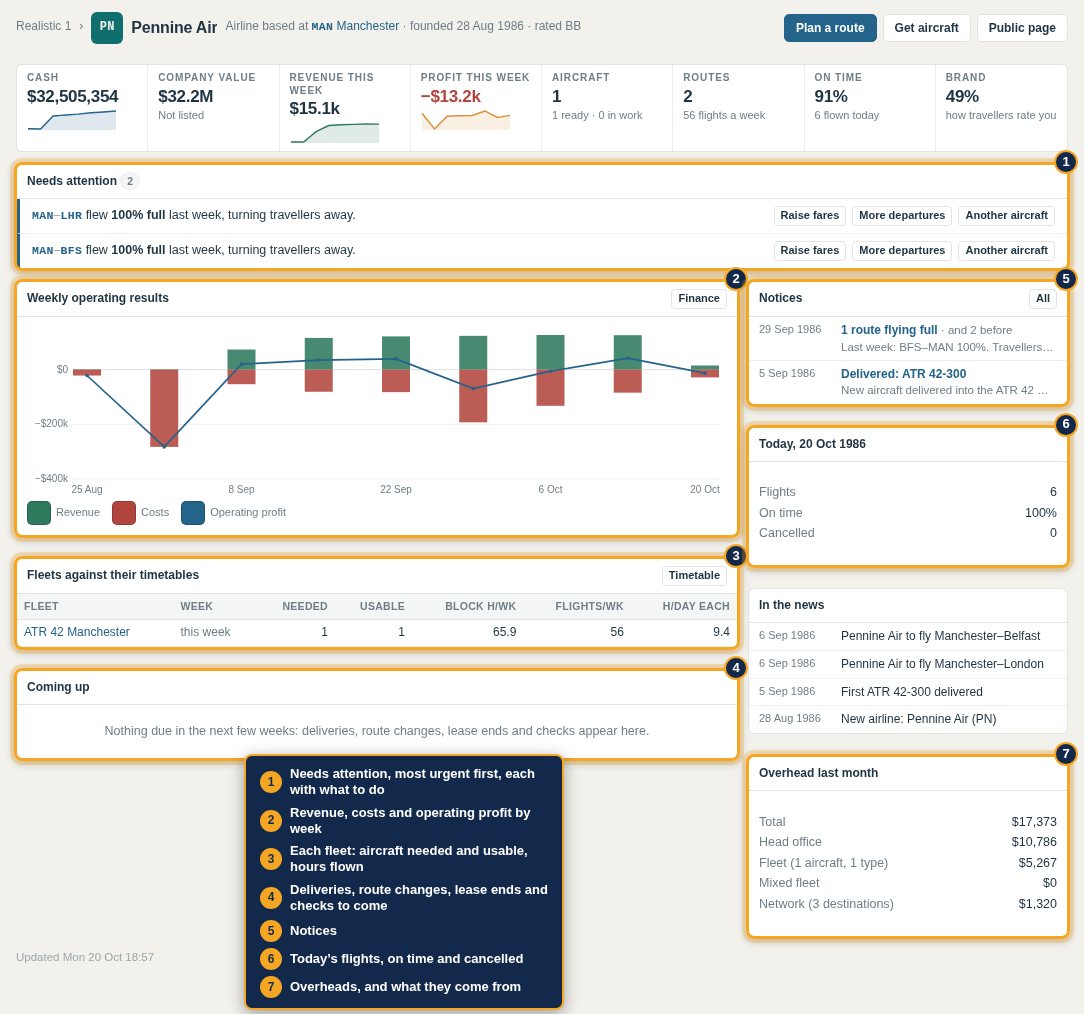
Each visit starts on the airline's Overview:
- Needs attention, most urgent first: losses and cancelled flights, then warnings, then chances to earn more. Each comes with what to do about it.
- Weekly operating results: revenue, costs and operating profit by week.
- Fleets against their timetables: aircraft needed and usable, and hours flown.
- Coming up: deliveries, route changes, lease ends and checks.
- Notices and Today: flights flown, on time and cancelled.
A month in, both routes fly full every day. Needs attention offers three ways to earn more on each: Raise fares, More departures and Another aircraft.
Reading your routes
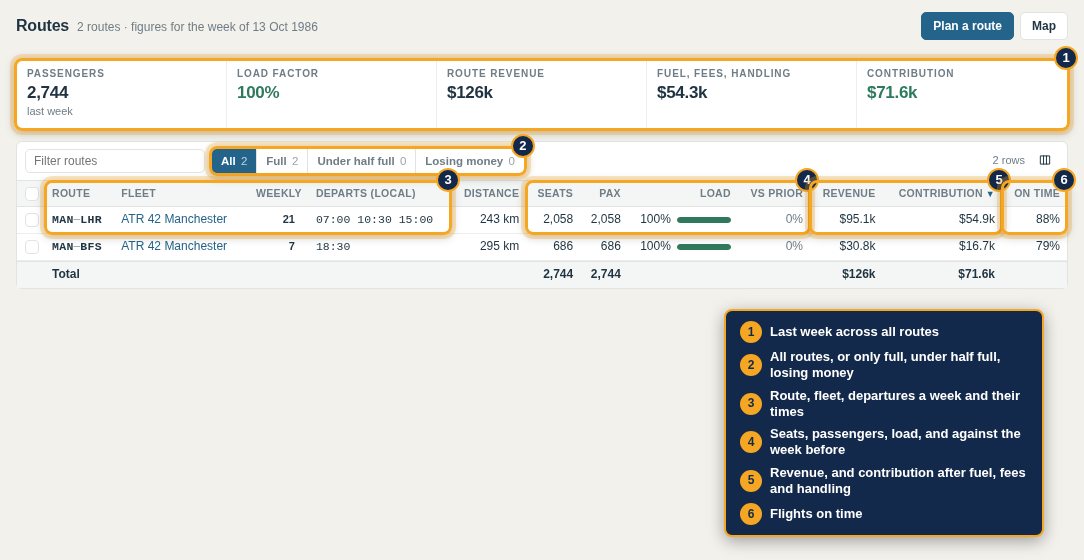
Routes lists every route with last week's figures:
| Column | Shows |
|---|---|
| Route, Fleet, Weekly, Departs | The airports, the fleet, departures a week each way and their local times |
| Seats, Pax, Load, Vs prior | Seats flown, passengers, the share filled, and passengers against the week before |
| Revenue and Contribution | Tickets, fees and freight, and what is left after fuel, airport fees and handling |
| On time | Flights on time |
Show all routes, or only those full, under half full or losing money.
Manchester–London carried 2,058 passengers in the week of 13 October, 100% full, for $95,100 of revenue and $54,900 of contribution; 88% of its flights were on time.
A route's history
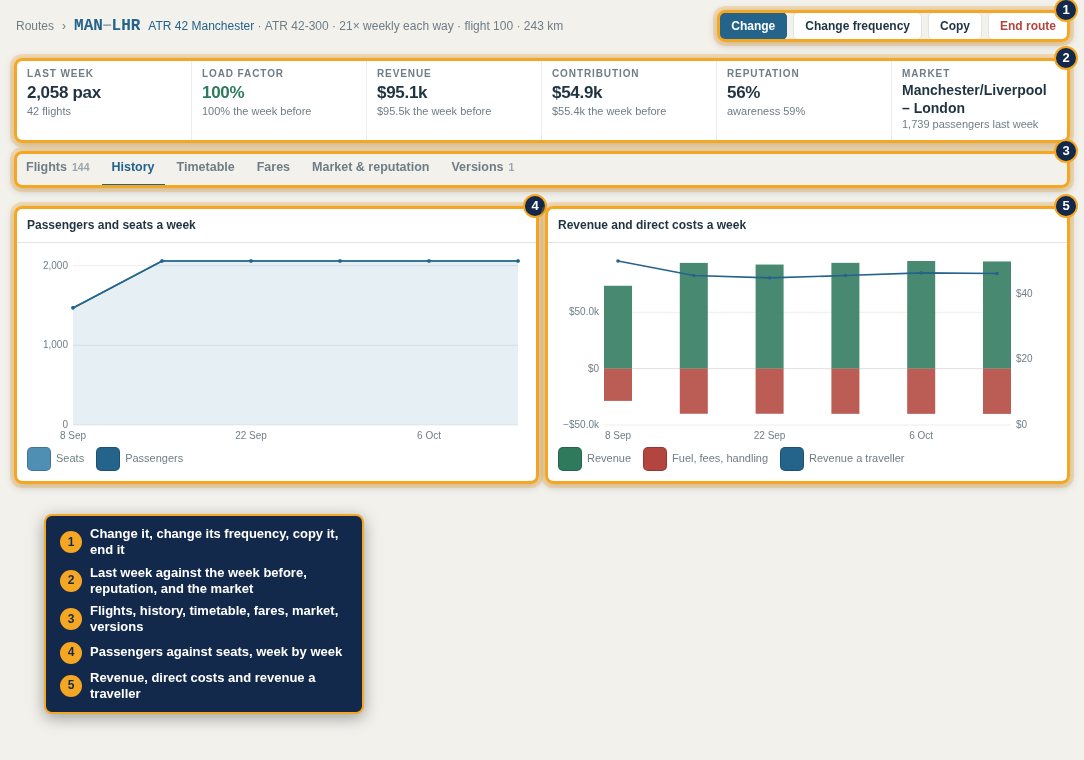
Open a route for its last week against the week before, its reputation and its market, then the tabs: Flights, History (passengers against seats, revenue against direct costs and revenue a traveller, week by week), Timetable, Fares, Market & reputation and Versions (each change to the plan).
The market and your reputation on it
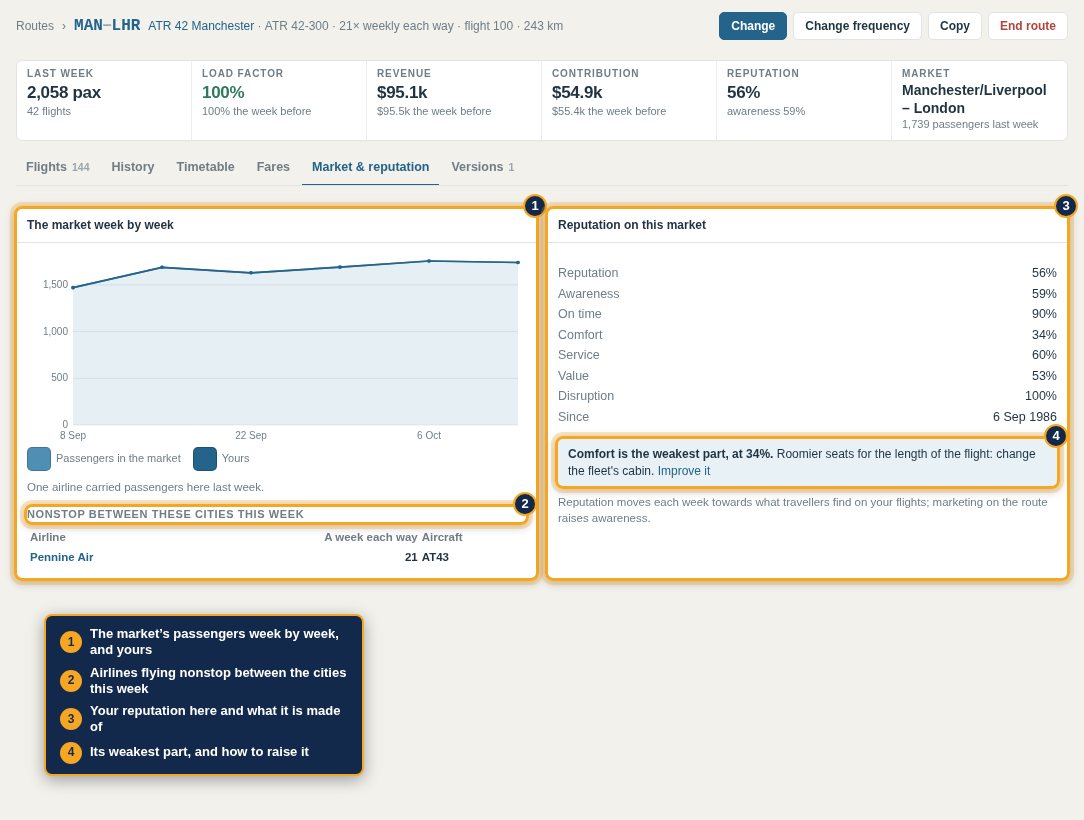
Market & reputation shows the market's passengers week by week with your share, the airlines flying nonstop between the cities this week, and your reputation on the market: on time, comfort, service, value and disruption, with its weakest part and what raises it.
A new route builds its travellers over its first months as they learn about it. Judge it against the market, not its first week; a campaign helps it build faster.
Raise fares on a full route
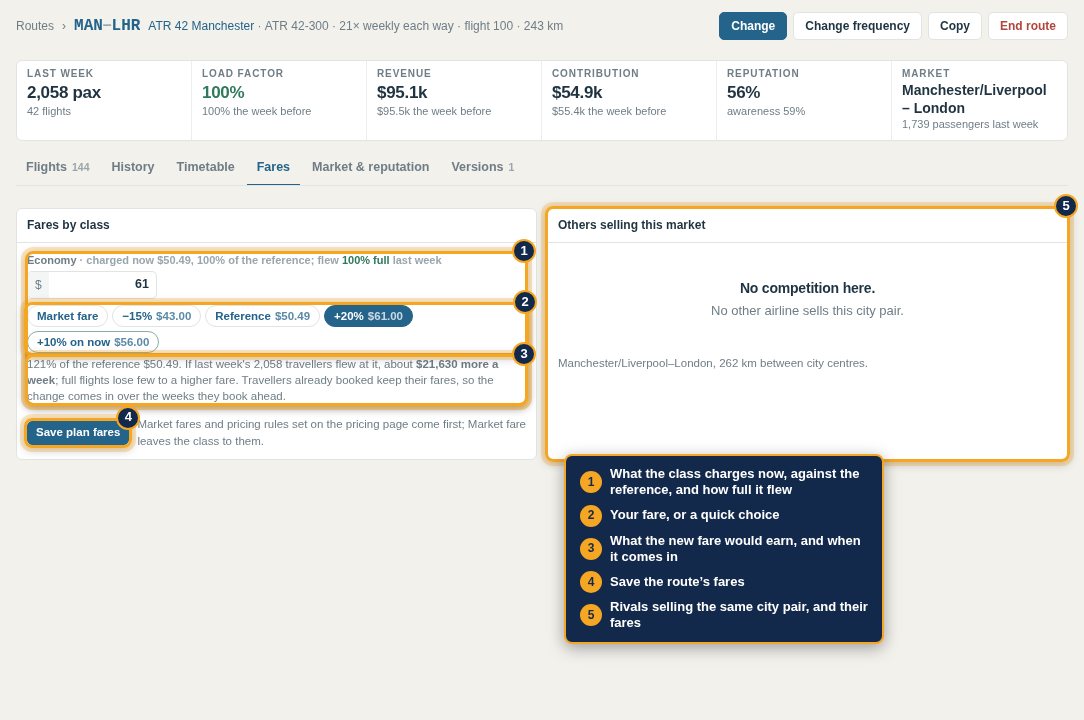
Raise fares opens the route's Fares tab: each class's fare against the reference fare and how full it flew, quick choices, and what the new fare would have earned on last week's travellers. Travellers already booked keep their fares, so a change comes in over the weeks people book ahead. Rivals selling the same city pair are listed below with their fares.
Pennine Air raises London's economy fare from the $50.49 reference to $61, which on last week's travellers would earn about $21,600 a week more.
More departures
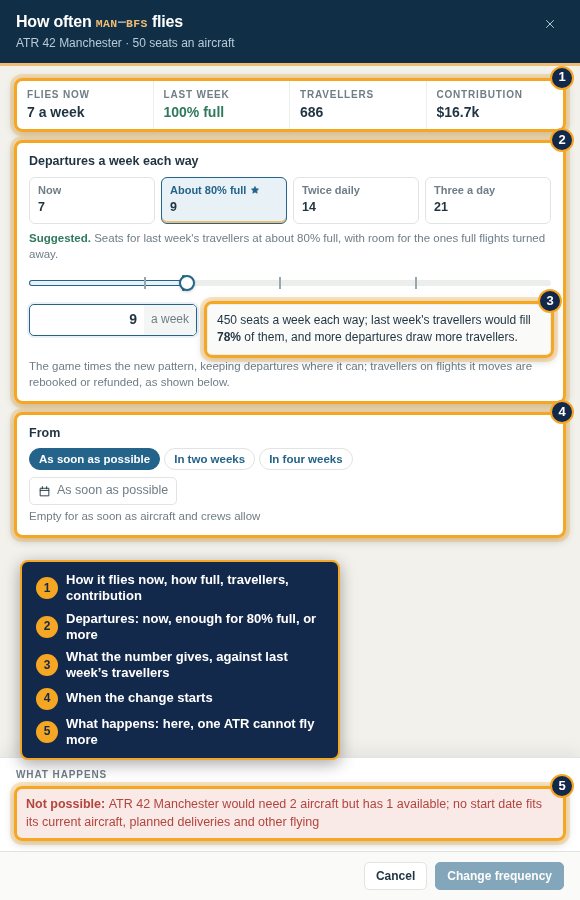
More departures opens the frequency sheet: how it flies now and how full, departures that would fill to about 80% or seat the travellers turned away, when the change starts, and what it does to the fleet. Where the times clash, the game searches for times that fit around the fleet's other flying.
Nine Belfast departures a week would need a second aircraft, so for now it says not possible.
End a route
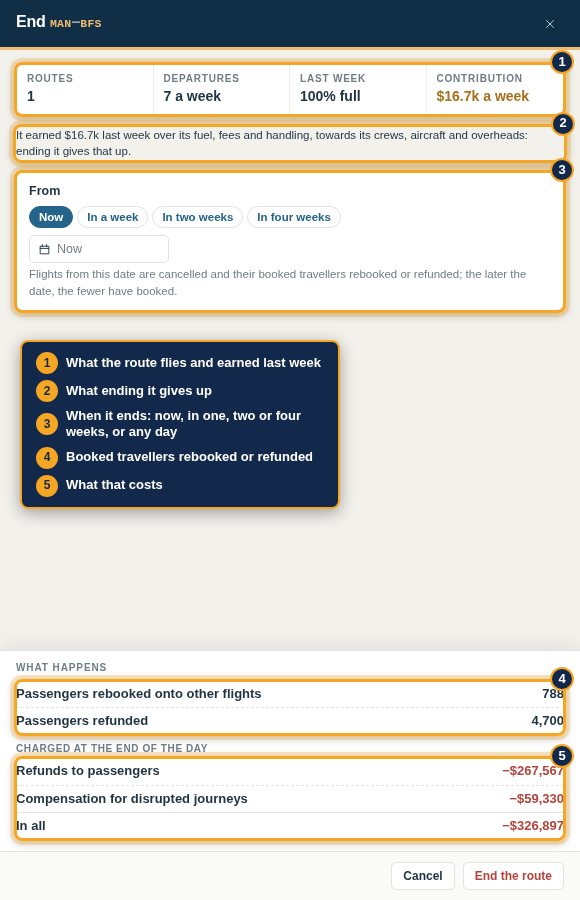
End route shows what the route earned last week, lets you end it now, in one, two or four weeks or on any day, and says how many booked travellers are rebooked or refunded and what that costs. A later end date leaves fewer to move.
When a route needs attention:
| You see | Look at | Usually |
|---|---|---|
| Low load on some days | Flights | Drop departures on quiet days before cutting fares |
| Low load every day | Market & reputation, research | Too many seats or a weaker product: a smaller aircraft, fewer departures or a better product |
| Full every day | Fares | Raise fares, add departures or another aircraft |
| Load falling after a rival arrives | Market & reputation | See whether you lose on fare, frequency or product before reacting |
| Profit low despite good loads | History | Fares too low, or the aircraft too big or costly for the route |
Keep the operation healthy
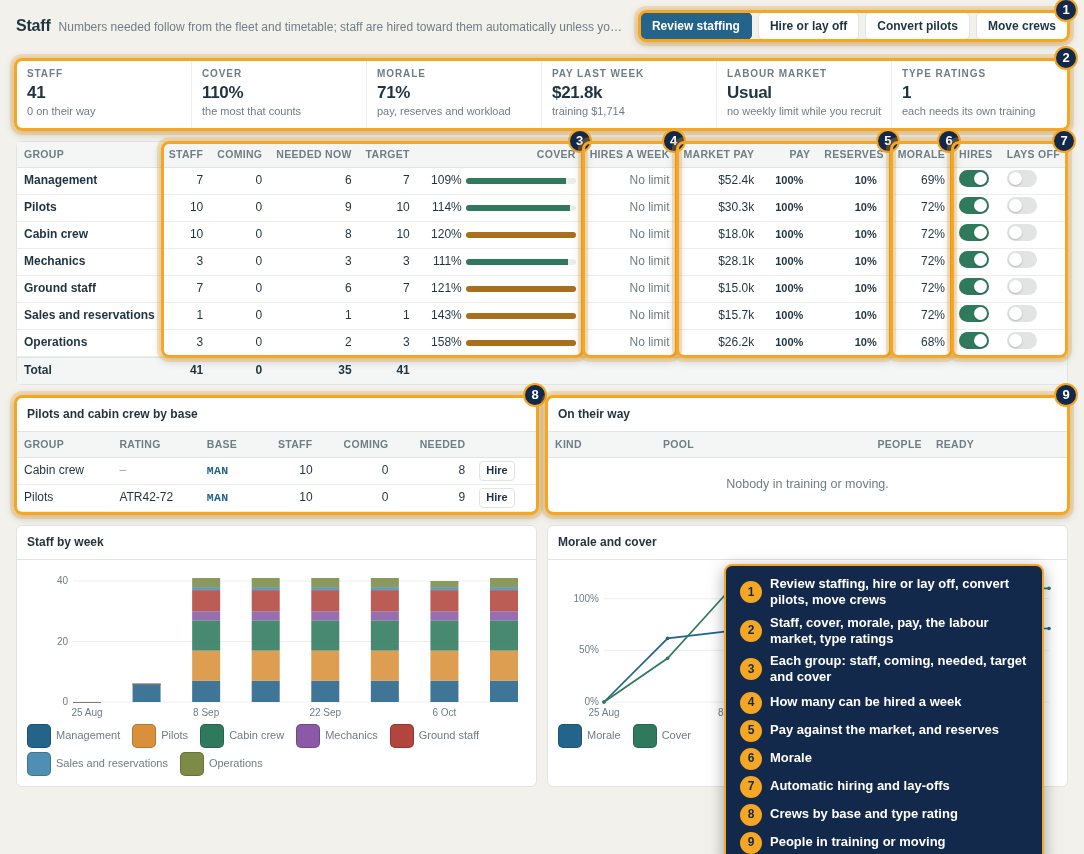
- Staff: each group's staff, people coming, needed now and the target with reserves, cover, pay against the market, reserves, morale and automatic hiring. Low morale shows up as delays.
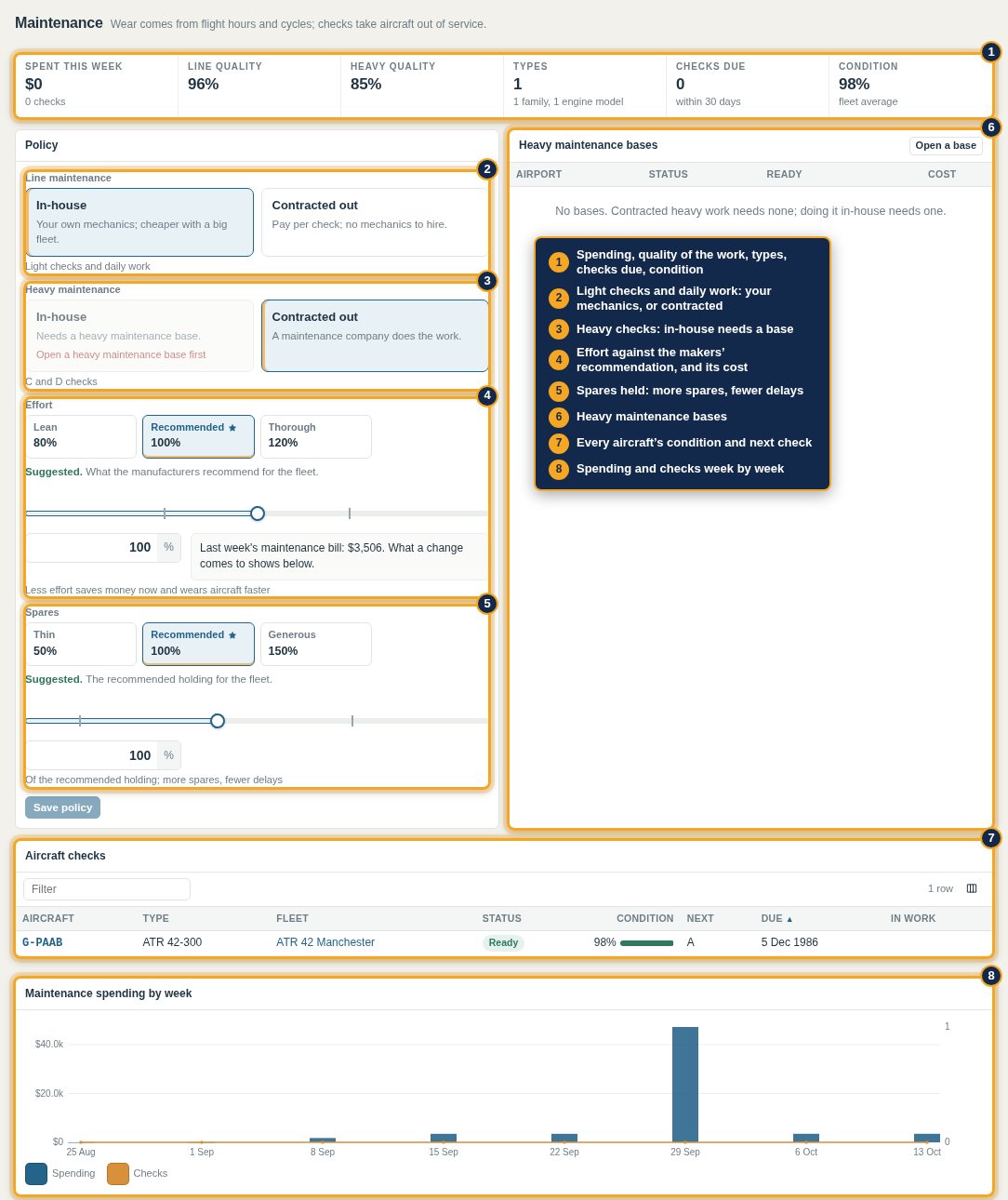
- Maintenance: who does light and heavy checks, effort and spares, and every aircraft's condition and next check.
Read the statements
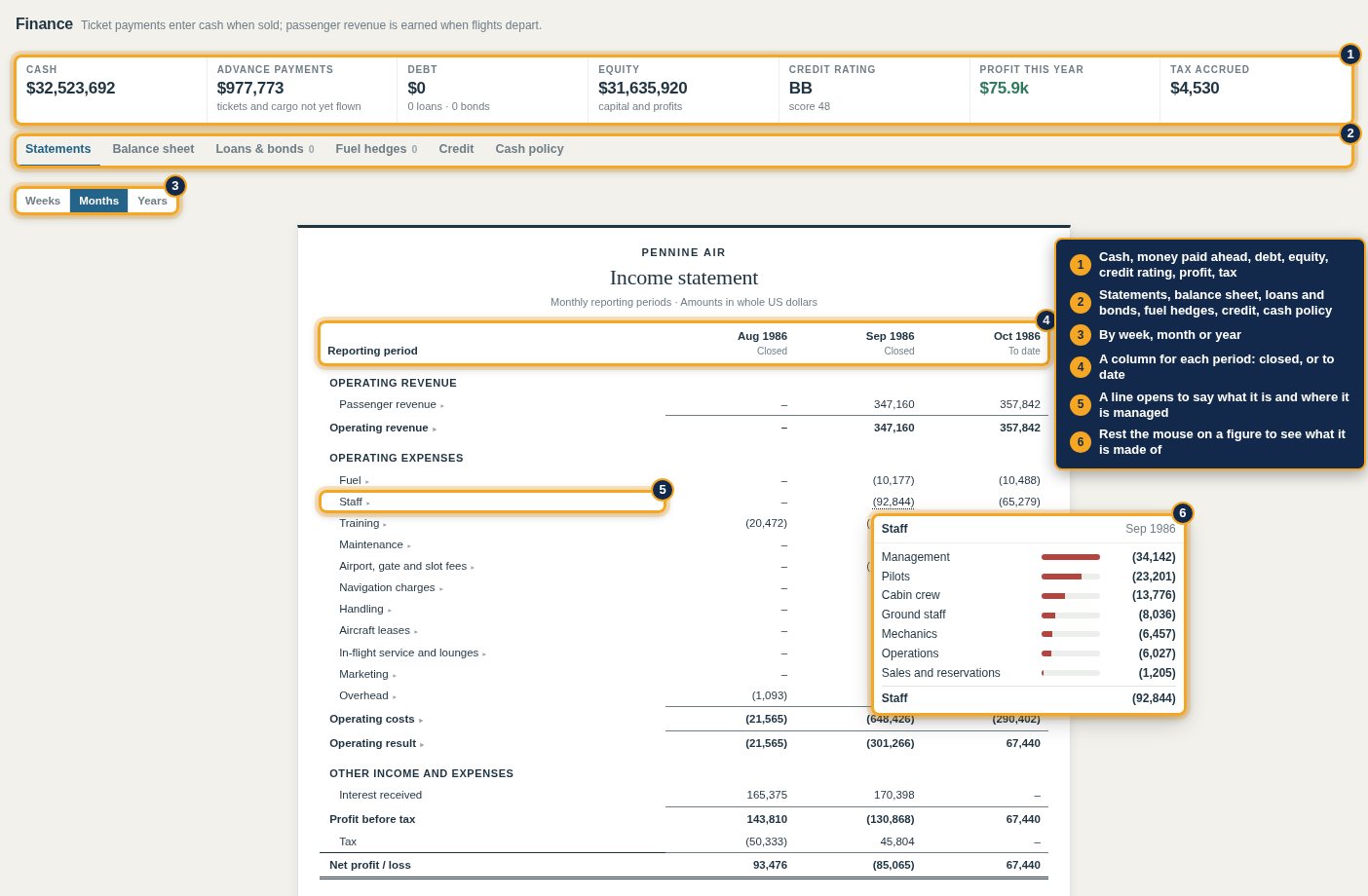
Finance has the statements by week, month or year, a column for each period. A line opens to say what it is and where it is managed; resting the mouse on a figure shows what it is made of, by route, staff group, check or charge. The other tabs are the balance sheet, loans and bonds, fuel hedges, credit and the cash policy.
Leave it running
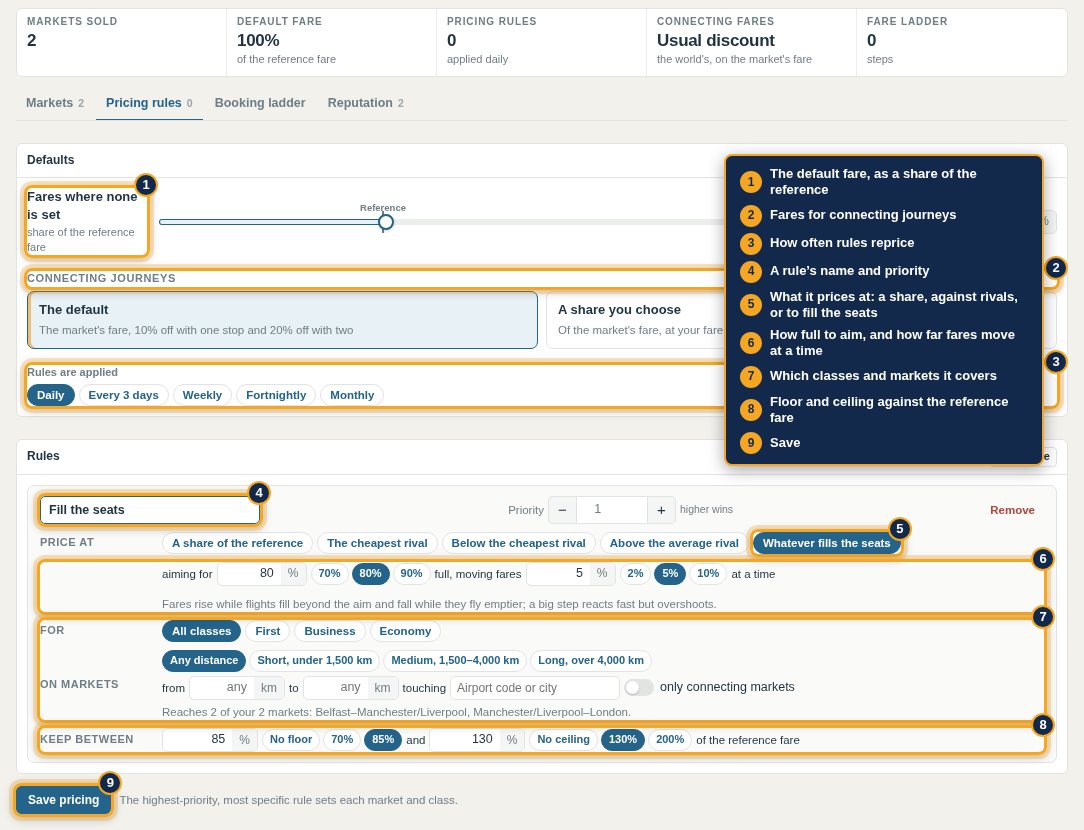
Under Fares & pricing → Pricing rules, a rule can price for you while you are away: at a share of the reference fare, against the cheapest or average rival, or whatever fills the seats, aiming at a load and moving fares a step at a time, kept between a floor and a ceiling. Rules apply to the classes and markets you choose, daily or less often. With rules set, staff hired automatically and aircraft sent to their checks, the airline runs on its own; notices collect what needs you.
Pennine Air sets a rule aiming for 80% full, moving fares 5% at a time, kept between 85% and 130% of the reference.
Next: Growing past one aircraft.