START HERE
How a season plays
What runs on its own, what you decide on each visit, and how an airline grows.
The world keeps running
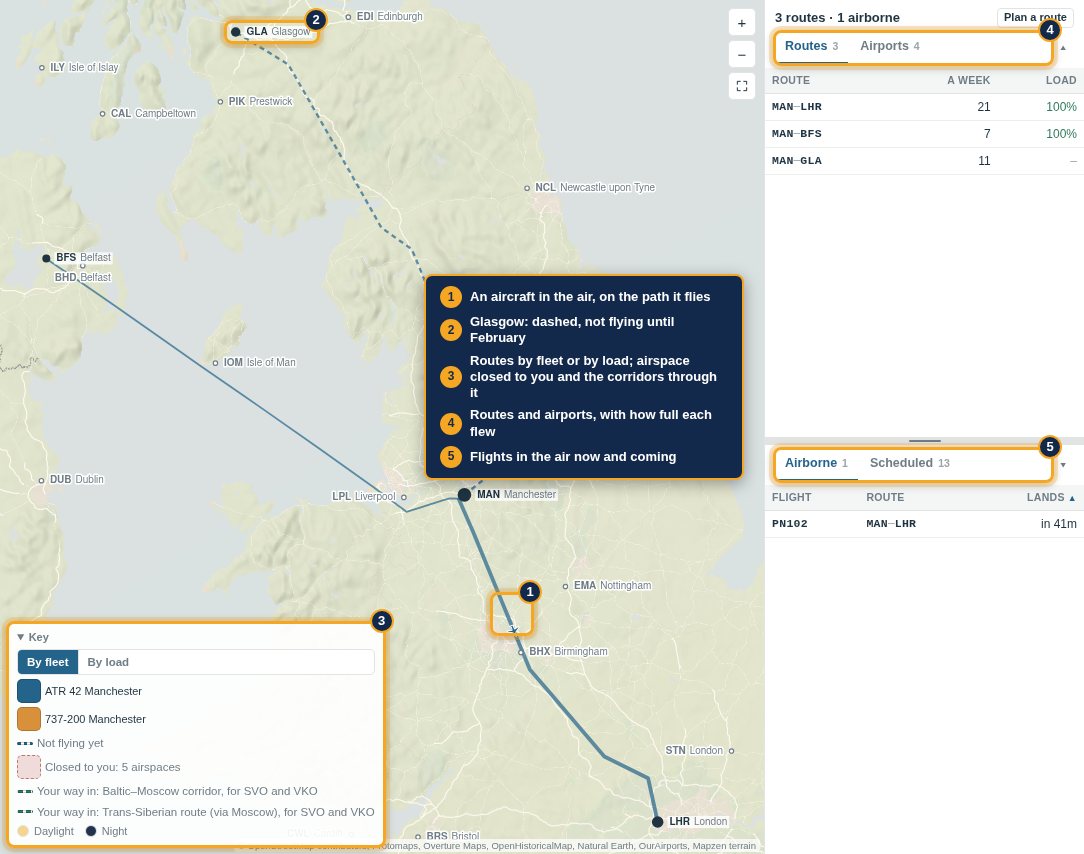
Every world has a clock. Flights operate on their timetables whether or not you are signed in: passengers travel, aircraft wear, staff are paid and bills fall due. If the server stops, the world catches up rather than pausing.
An established airline is built to survive days without you. Pricing rules keep fares in line, staff are hired for the schedule, aircraft are assigned to flights each day from where they really are, and checks are fitted in. Markets still move while you are away, so an airline left for weeks drifts, but nothing collapses because you missed a weekend.
A typical visit
- Needs attention on the overview: losses, cancelled flights, short fleets, overdue checks, full routes, rivals arriving, each with what to do.
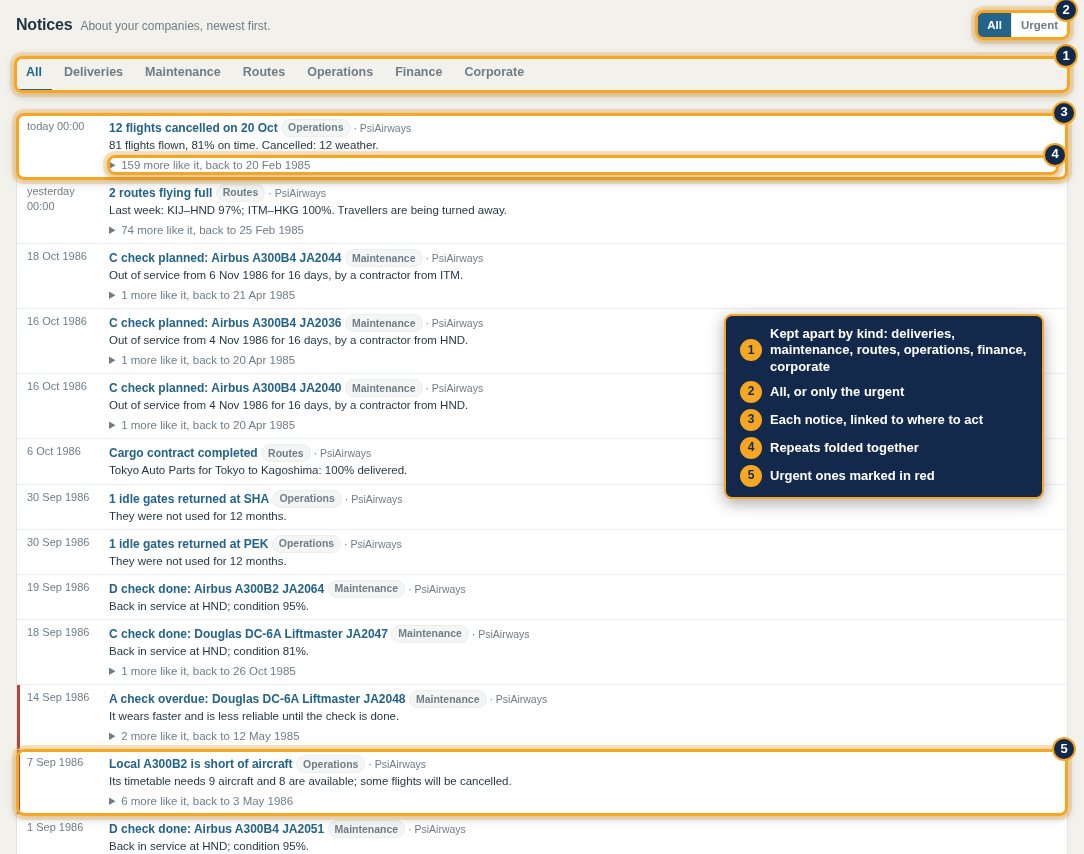
- Notices, kept apart by kind: deliveries, maintenance, routes, operations, finance and corporate. Repeats are folded together and urgent ones marked. They are also under the bell in the top bar with your other notifications, and urgent ones come by email; Notification settings chooses which come by email or as browser notifications.
- Results: the routes that made and lost money, and through research or a route's market tab, roughly why.
- Next step: an order, a new market, a fare, a cabin refit, a fleet replacement.
The growth loop
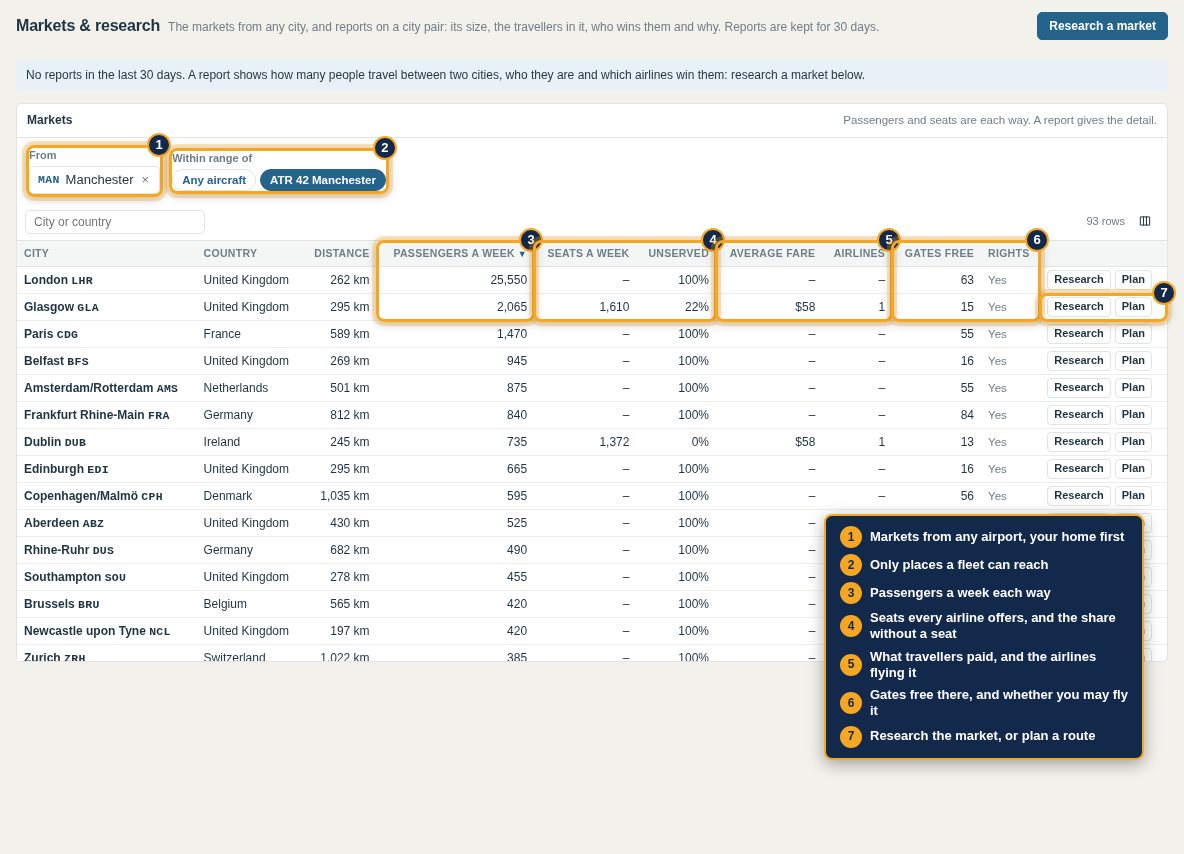
Most of a season follows one loop: find a market, plan a route, let it mature, reinvest what it earns. Nothing caps how big you grow, but every new family, base, hub and market adds cost and complexity, and margins are realistic, so growth only pays on a sound network.
Keeping an airline good
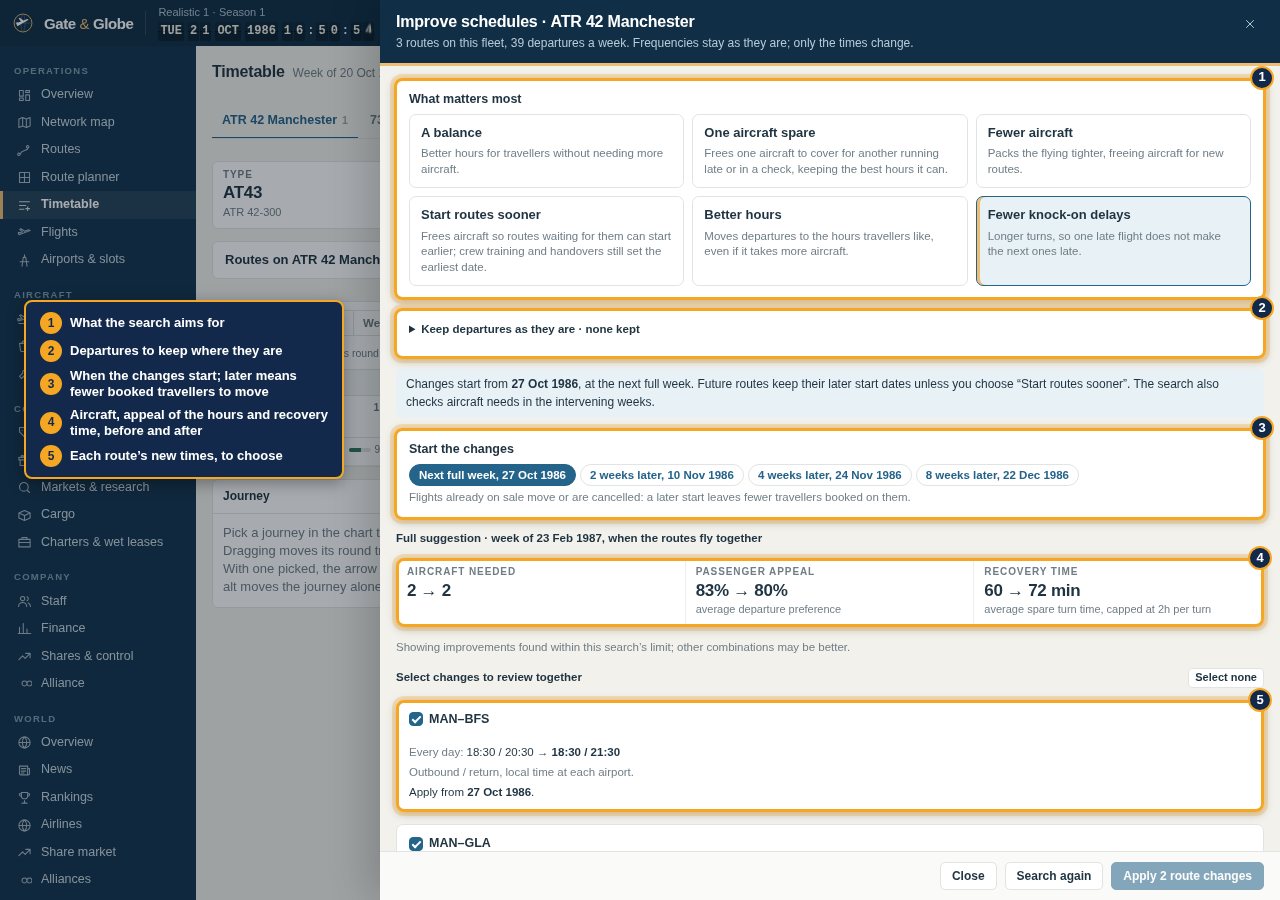
Growing is half the game. Aircraft age and need heavier checks, cabins date, rivals copy your best markets, and fuel and demand move with the decades. Replacing fleets, refitting cabins, retiming schedules with Improve schedules, tuning pricing rules and looking after staff keep an airline competitive without new routes.
The arc of a season
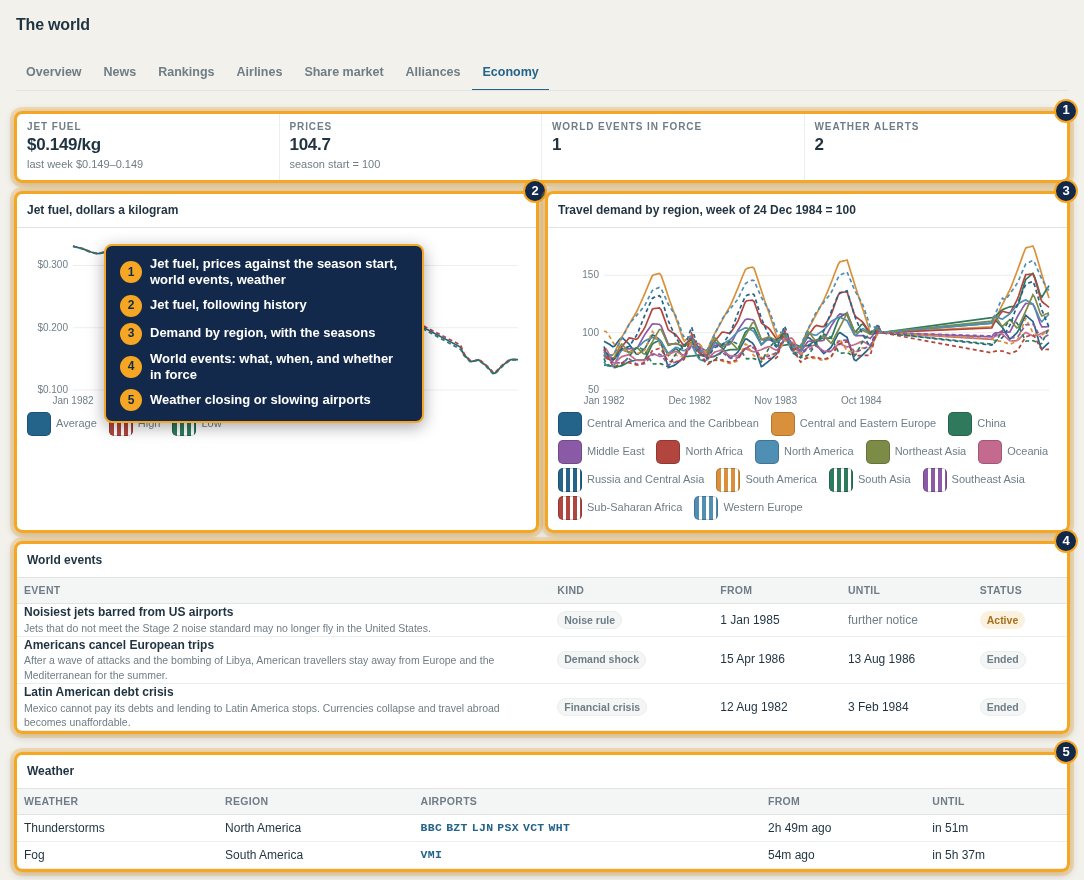
Early in a season markets are open, competition is thin and cash is short. Through the middle, networks meet, alliances form, companies list and takeovers begin. Late, replacement cycles, reputation and balance sheets decide who finishes well.
History moves underneath: aircraft enter and leave production, cabin classes appear, markets open, fuel follows the era, and rare world events such as fuel shocks, crises and groundings hit everyone alike.
When the season ends
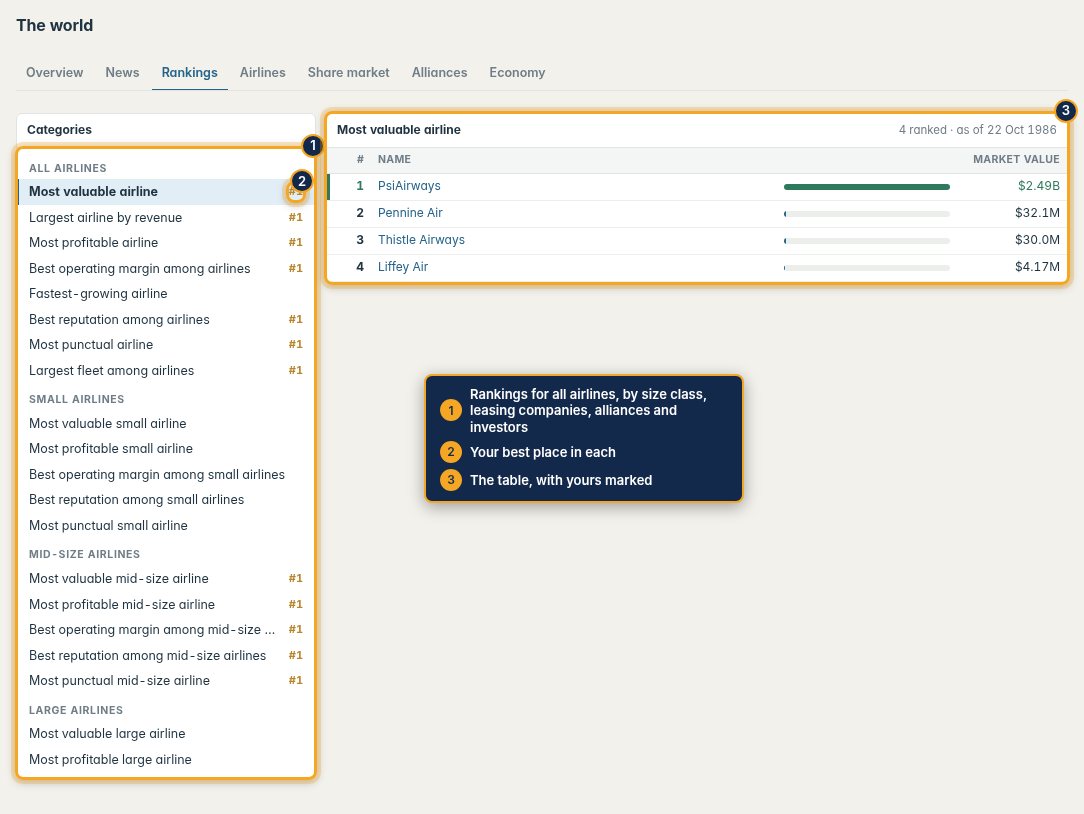
A season that ends closes with final standings. Owned aircraft and other assets count toward final value; leased aircraft away from their contracted return airport forfeit their deposits. Every airline goes into its player's career record, results and trophies stay on profiles, and the world's next season opens with a time to join. Some worlds never end; there, your airline lasts as long as you keep it. See Competition & rankings.